Seasickness in Galápagos: How to Prepare for Your Ferry Trip
Key facts:
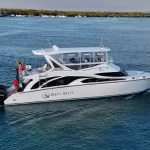
- Fast speedboats (4–5 engines, 200 HP each)
- Speed: 20–25 knots depending on conditions
- Higher seas: July to December
Seasickness in Galápagos when taking a ferry can vary, and the chances of getting unwell depend on each person. From our experience, the ferries are fast speedboats equipped with four to five engines of 200 HP each, traveling at around 20 to 25 knots depending on sea conditions. For more details on boat types and logistics, check our essential ferry travel guide.
The “Rough Sea Season”
There are certain seasons, especially between July and December, when cold southern currents arrive and the sea becomes rough.
During these months, routes like Santa Cruz to San Cristóbal can be more challenging due to stronger wind and ocean movement.
Other routes, such as Isabela and Floreana, tend to be slightly calmer, although conditions always vary from day to day.
Tips to Reduce Motion Sickness
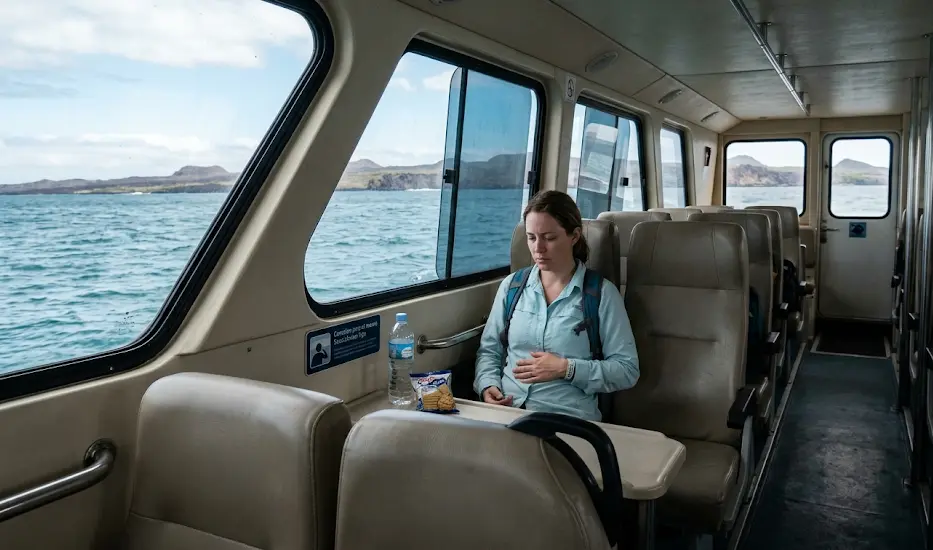
- Best Seating: Sit toward the back of the boat (from the middle section to the rear). This area is better ventilated and much more stable than the front.
- Medication: Consider using motion sickness patches or taking medication at least one hour before the trip.
- Advance Notice: If you are very prone to seasickness, let us know in advance. We can recommend a larger and more stable boat when available.
Taking these measures can help significantly reduce discomfort. If you are ready to travel, you can book your Galapagos ferry tickets online to secure the most stable vessels available.