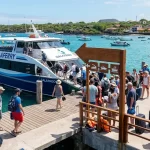
Traveling between the inhabited islands of the Galápagos Archipelago is an essential part of any trip to Ecuador’s most famous national park. While small airplanes connect some islands, ferries (locally known as fibras) are the most common and economical option for visitors who want flexible schedules and the opportunity to enjoy the sea. Below you will find clear descriptions for the main ferry routes: Santa Cruz ➜ San Cristóbal, San Cristóbal ➜ Santa Cruz, Santa Cruz ➜ Isabela, Isabela ➜ Santa Cruz, Santa Cruz ➜ Floreana and Floreana ➜ Santa Cruz.
Main ferry routes:
- Santa Cruz ⇄ San Cristóbal (~2 hours)
- Santa Cruz ⇄ Isabela (~2.5 hours)
- Santa Cruz ⇄ Floreana (~1.5–2 hours)

Select Your Galapagos Inter-Island Ferry Route
Santa Cruz ➜ San Cristóbal
⏱ Duration: Approx. 2h 30min
07:00 AM
03:00 PM
San Cristóbal ➜ Santa Cruz
⏱ Duration: Approx. 2h 30min
07:00 AM
03:00 PM
Santa Cruz ➜ Isabela
⏱ Duration: Approx. 2h 15min
07:00 AM
03:00 PM
Isabela ➜ Santa Cruz
⏱ Duration: Approx. 2h 15min
06:00 AM
03:00 PM
Santa Cruz ➜ Floreana
⏱ Duration: Approx. 2h
08:00 AM
Floreana ➜ Santa Cruz
⏱ Duration: Approx. 2h
03:00 PM
The Morning Crossings: Calm Seas and Early Starts
The morning ferry schedule is almost universally recommended by local guides and seasoned independent travelers. From an oceanographic perspective, the sea surface is at its calmest during the early morning hours because local coastal winds have not yet picked up. This results in a much smoother, flatter ride across the open channels, vastly reducing the instances of severe motion sickness among passengers. Furthermore, taking the morning ferry means you arrive at your destination island around 09:00 AM. This opens up your entire day, allowing you to check into your accommodation early, explore local beaches like Tortuga Bay or Concha de Perla, or even join a last-minute daily snorkeling excursion. The obvious drawback is the intense wake-up call, requiring you to be at the municipal pier by 05:30 AM for mandatory baggage inspections. For more detailed information on routing and connections, check out our comprehensive guide on galapagos ferries inter island routes and practical info.
The Afternoon Crossings: Relaxed Mornings with Choppier Waters
Conversely, selecting the afternoon ferry schedule appeals to travelers who detest waking up before dawn. It allows for a slow, relaxing morning where you can enjoy a full breakfast, squeeze in one last swim, and complete your hotel check-out without any stress. However, the trade-off on the water is severe. As the tropical sun warms the atmosphere throughout the morning, oceanic wind patterns accelerate. By 14:00 PM, the sea channels between the islands become considerably choppier, creating larger swells and a far rougher ride. If you are prone to motion sickness during these later hours, you can consult our essential seasickness galapagos ferry tips to prepare for the crossing. Additionally, arriving at your new destination around 16:30 PM means the day is effectively over, and most local businesses and tour operators will already be closed for the evening.
Schedule Comparison Breakdown
Ultimately, travelers must weigh their aversion to early morning alarms against their tolerance for rough oceanic travel. For a seamless booking experience and to view manual verification for both slots, you can easily read how to safely book a ferry online in galapagos and secure your tickets today through GalaFerry.
Santa Cruz ➜ San Cristóbal
The Santa Cruz to San Cristóbal route links Puerto Ayora (Santa Cruz) with Puerto Baquerizo Moreno (San Cristóbal). This connection is popular because San Cristóbal often receives flights from the mainland. The voyage typically takes around 2 hours, depending on sea conditions. Passengers usually travel early in the morning or in the afternoon. Tip: book tickets in advance during high season to secure your preferred departure.
San Cristóbal ➜ Santa Cruz
The return trip from San Cristóbal to Santa Cruz follows the same path in reverse. Santa Cruz functions as a hub for travelers because it offers more lodging, dining and transport options. Journey time is about 2 hours. If your itinerary includes further travel to Isabela or Floreana, this leg is essential for coordination.
Santa Cruz ➜ Isabela
Expect a slightly longer crossing — generally around 2.5 hours. Because the trip can be rough when the sea is choppy, bring motion-sickness remedies if you are sensitive.
The Santa Cruz to Isabela route connects Puerto Ayora with Puerto Villamil (Isabela), the archipelago’s largest island. Isabela is famous for its volcanic landscapes, giant tortoises, and the Wall of Tears.

Isabela ➜ Santa Cruz
Returning from Isabela to Santa Cruz also takes about 2.5 hours. This route is well-traveled by tourists moving between islands, so tickets can sell out on weekends and during holidays. Recommendation: reserve your ticket at least 24–48 hours in advance if possible.
Santa Cruz ➜ Floreana
Floreana is quieter and less developed than the other inhabited islands. Ferries from Santa Cruz arrive at Puerto Velasco Ibarra (Floreana) in roughly 1.5 to 2 hours. Travelers choose Floreana for its historic sites, snorkeling spots and intimate island atmosphere. Services and accommodations are limited, so plan accordingly.
Floreana ➜ Santa Cruz
The return crossing from Floreana to Santa Cruz usually lasts between 1.5 and 2 hours. Keep in mind that schedules can shift due to weather and sea state, and ferries sometimes adapt routes based on demand.
Practical Tips for Ferry Travel in the Galápagos
- Book early: Ferries have limited capacity. Book online or at the ticket office ahead of busy dates.
- Arrive early at the pier: Be at the dock at least 30–45 minutes before departure.
- Packing limits: Most operators allow one medium suitcase and a small carry-on; confirm limits with your operator.
- Sea conditions: The Pacific can be choppy. If you get seasick, take medication beforehand.
- Weather and clothing: Bring a light jacket — crossings can be windy and cool.