Planning an independent adventure to the Galapagos Islands requires a clear understanding of local maritime logistics. Navigating between the main islands involves passing through three primary ports, each with its own distinct infrastructure, regulatory fees, and transit requirements. This comprehensive overview provides essential travel tips to ensure a seamless island-hopping experience across Santa Cruz, San Cristóbal, and Isabela.
1. Puerto Ayora (Gus Angermeyer Pier in Santa Cruz)
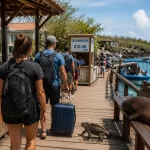
As the primary economic and tourism hub of the archipelago, Puerto Ayora’s Gus Angermeyer Pier is the busiest terminal in the Galapagos. Because Santa Cruz connects most inter-island ferry routes, understanding its layout is crucial for efficient travel. The pier offers well-maintained passenger services, including shaded waiting areas, public restrooms, and nearby water taxi operations.
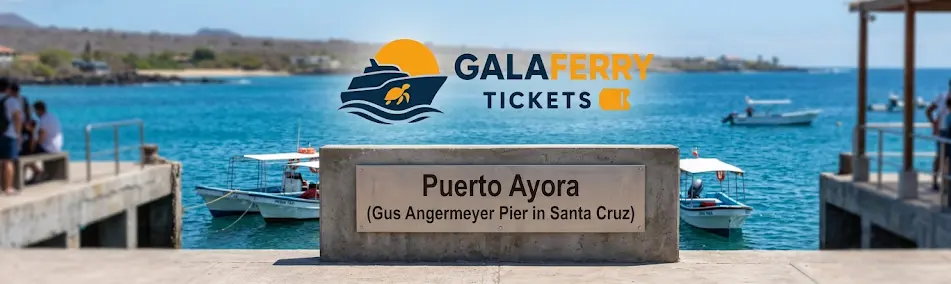
Security and environmental preservation are top priorities here. Before boarding any vessel, passengers must undergo strict biosecurity bag inspections managed by the Galapagos Biosecurity Agency (ABG) to prevent the introduction of invasive species. Additionally, the pier features secure luggage lockers, allowing travelers to safely store their heavy baggage while exploring the highlands or visiting the Charles Darwin Research Station prior to departure.
2. Puerto Baquerizo Moreno (San Cristóbal Pier)
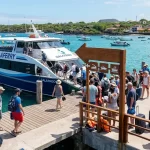
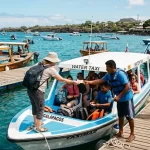
Located on the easternmost inhabited island, Puerto Baquerizo Moreno is the administrative capital of the province. The San Cristóbal Pier serves as a major entry point for travelers arriving via the local airport. Boarding access at this port is tightly regulated to manage passenger flow and maintain safety standards. Travelers must line up for a preliminary manifest check before boarding the water taxis that transport passengers to the main speedboats.
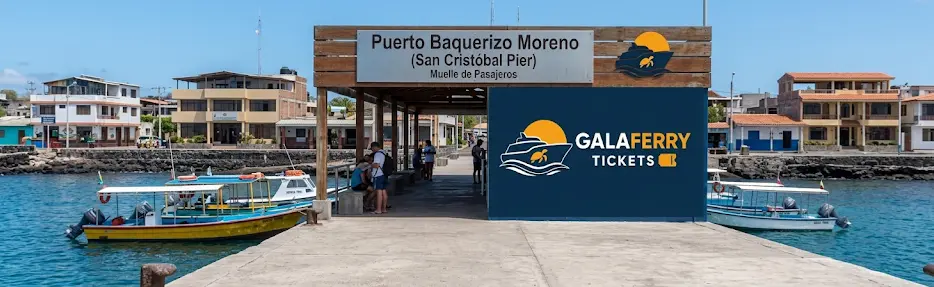
An important financial aspect to consider when transiting through San Cristóbal involves municipal dock fees. Visitors are required to pay a minor local pier use tax (typically around $1 to $2 USD), which directly funds port maintenance and eco-tourism infrastructure. It is highly recommended to keep small cash denominations on hand, as credit cards are not accepted for these localized transit fees.
3. Puerto Villamil (Isabela Pier)
Puerto Villamil on Isabela Island offers a more rustic, laid-back atmosphere, but its arrival logistics are the most strict. Upon disembarking at the Isabela Pier, all non-resident tourists must immediately pay a local island entry fee. This conservation tax (currently $10 USD for international tourists and $5 USD for nationals) is separate from the main Galapagos National Park entrance fee and must be paid in cash at the port control kiosk.
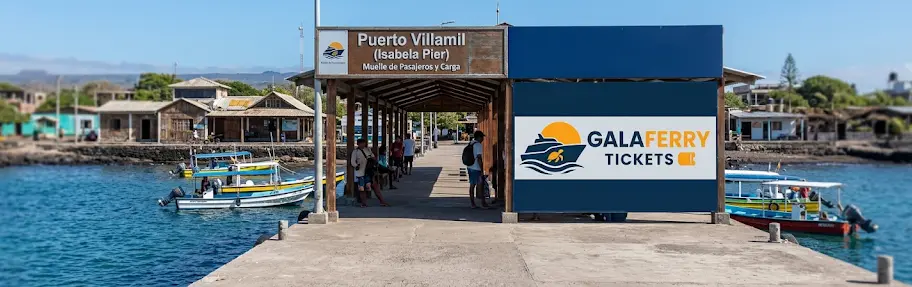
Because the pier is situated roughly one mile from the center of Puerto Villamil, arranging local transportation is necessary. Upon arrival, travelers will find open-air trucks (chivas) and local taxi pickups waiting outside the terminal. These options provide affordable transfers to hotels and town center accommodations, ensuring you can begin exploring Isabela’s stunning volcanic landscapes without delay.
Pro Travel Tip: Always arrive at the docks at least 45 minutes before your scheduled ferry departure. This ensures ample time for mandatory biosecurity luggage screening, manifest registration, and water taxi transfers.