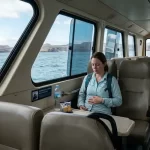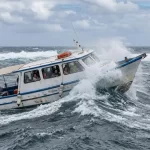
Stepping on board a public Galapagos speedboat for the first time can be a surprising experience for international tourists. These vessels are not large, multi-level cruise ships with stabilizer fins; they are high-powered, fiberglass speedboats designed to transit the open ocean quickly. Seating is rarely pre-assigned, meaning passengers must choose their physical spot on a first-come, first-served basis as they walk down the gangway. In the global travel community, an endless debate rages over where to sit to ensure a comfortable journey. To make an informed decision, you must understand the stark physical dynamics between sitting in the bow (front/inside) versus the stern (back/outside) of the speedboat.
The Bow (The Forward Cabin): Enclosed and Dry
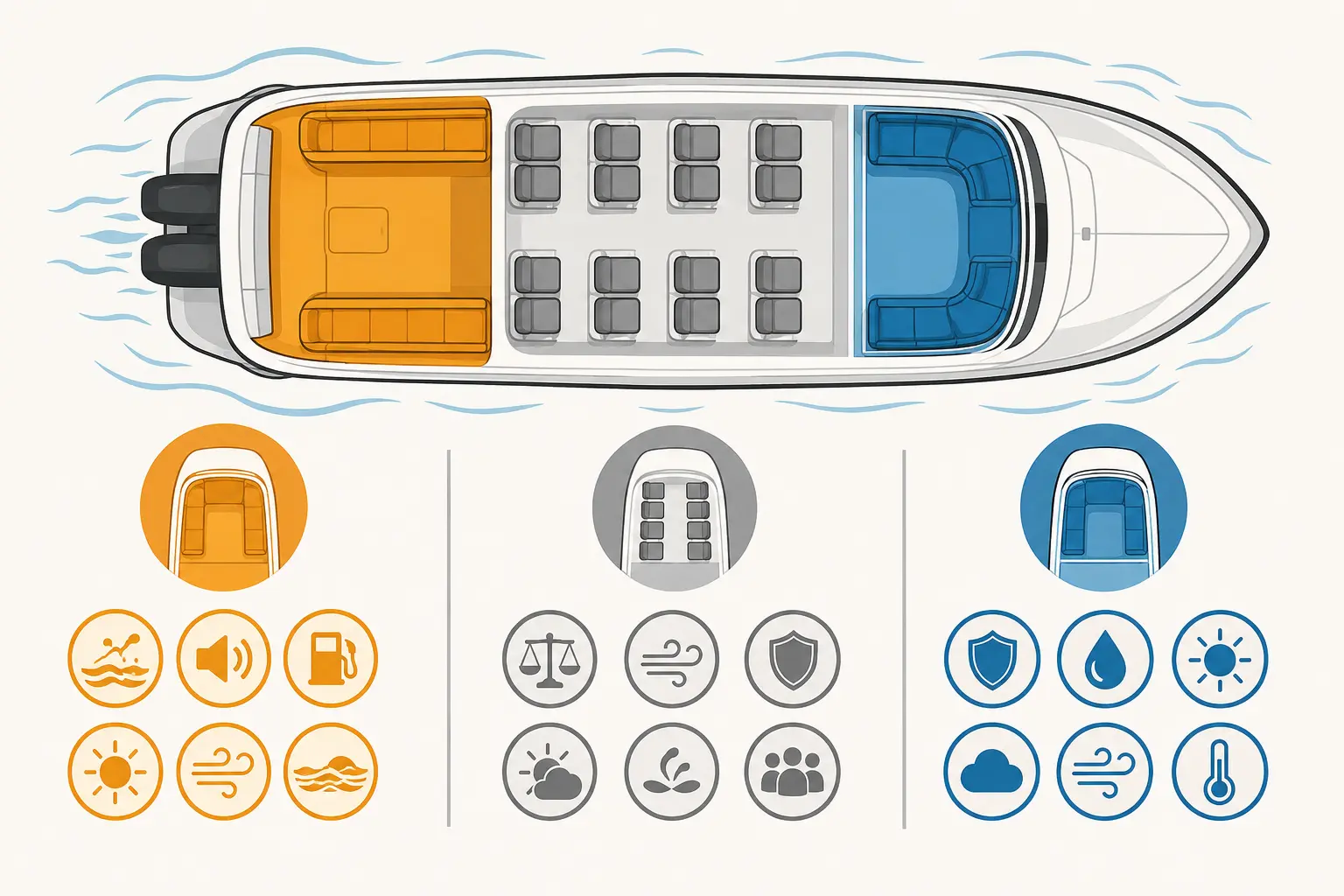
The front portion of the speedboat, or the bow, is almost always fully covered by a hardtop structure and enclosed by clear plastic clears or glass windows. The main advantage of choosing a seat in this area is absolute protection from the environmental elements. You will stay completely dry from the heavy ocean spray, shielded from the whipping marine winds, and shaded from the powerful equatorial sun. However, the bow is the most volatile area of any vessel moving at high speed. When the speedboat climbs over a large ocean wave and drops down, the bow experiences a dramatic vertical drop, slamming hard into the trough of the sea. If you suffer from chronic lower back or neck pain, sitting in the front can feel like an exhausting, jarring rollercoaster ride. For a broader overview of how these vessels operate across the archipelago, you can read our galapagos ferries inter island routes and practical info.
The Stern (The Open-Air Rear): Stable and Loud
The rear section of the boat, known as the stern, operates on an entirely different physical plane. Because the heavy outboard motors (often three or four massive 300-horsepower engines) anchor the back of the hull firmly into the water, the stern acts as a pivot point. The vertical movement here is minimal, making it the most stable and physically forgiving location on the entire boat. Furthermore, sitting outside in the open air allows your eyes to lock onto the stationary horizon line, which is medically proven to combat the inner-ear imbalances that cause nausea. The major disadvantages of the stern are sensory: you will almost certainly get wet from ocean water spray, the roar of the engines is incredibly loud, and depending on the wind direction, you may inhale exhaust fumes from the marine fuel.
Speedboat Seating Comparison Matrix
| Seating Zone | Key Advantages | Key Disadvantages | Recommended For |
|---|---|---|---|
| The Bow (Front) | 100% dry, wind protection, sun shade. | Extreme vertical movement, violent slamming. | Travelers prioritizing warmth and dryness. |
| The Stern (Back) | Maximum physical stability, fresh ocean air. | Loud engine noise, heavy water spray, fuel odors. | People highly prone to severe motion sickness. |
| The Mid-Section | Balanced motion, moderate protection. | Fills up instantly, limited fresh airflow. | Average travelers seeking a compromise. |
When traveling between the islands, knowing these seating realities allows you to board with a clear plan. If you want a deeper breakdown of the overall logistics, take a look at our essential ferry travel guide. Securing your next transit with GalaFerry ensures a safe, organized voyage across the Galapagos marine reserve.