The Galapagos Port Check-In: Navigating Logistics in Puerto Ayora and Isabela
For independent travelers, the actual process of boarding an inter-island ferry in the Galapagos involves unique environmental protocols and municipal regulations that differ greatly from standard commercial travel. Many first-time visitors assume they can simply show up at the concrete dock ten minutes before departure, present a digital ticket, and step onto the boat. In reality, navigating the port check-in process requires an understanding of water taxis, biosecurity screenings, and local municipal taxes. Each major port across the archipelago has its own unique layout and specific operational hurdles that you must prepare for.
Departing from Santa Cruz (Puerto Ayora)
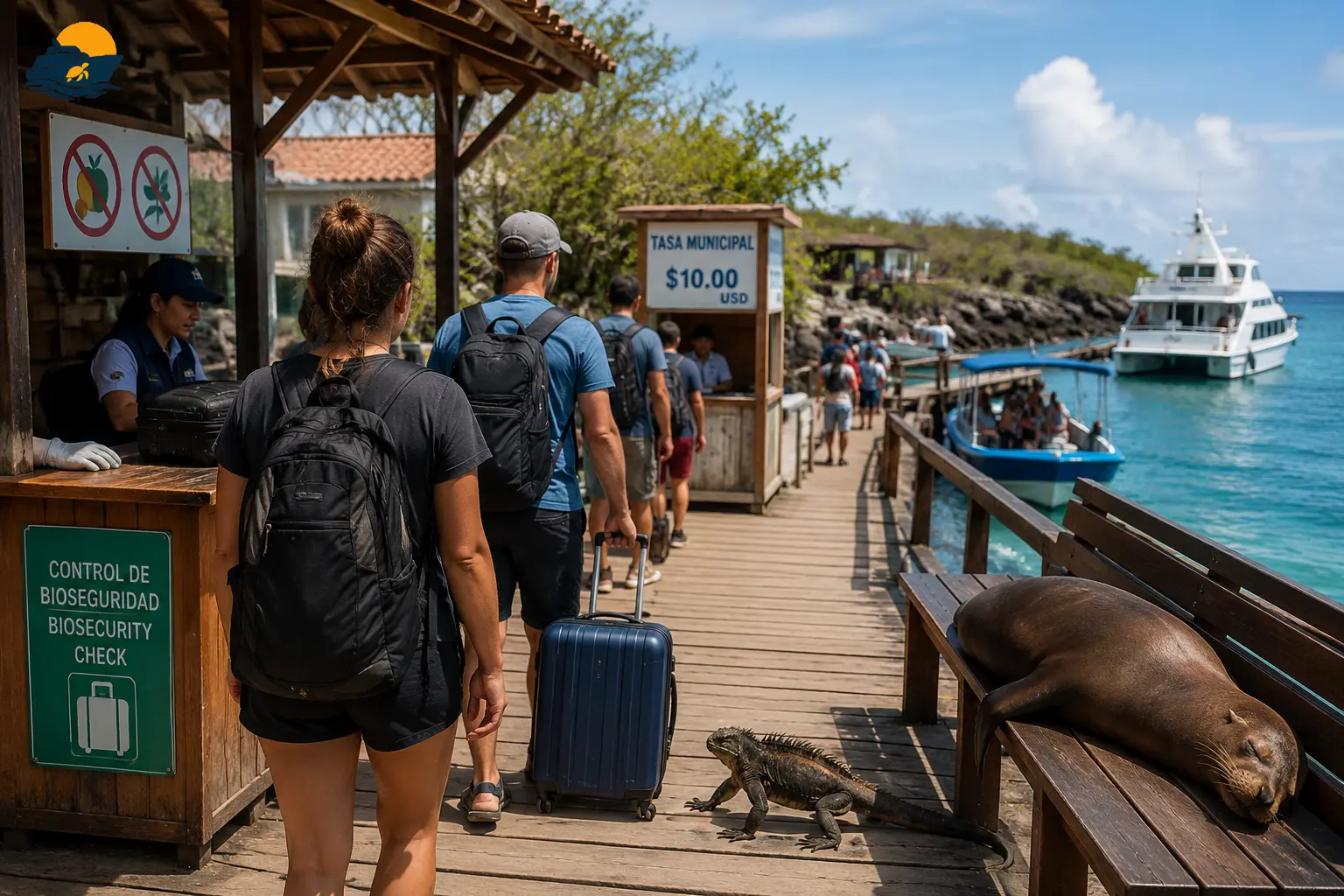
Puerto Ayora is the bustling commercial heart of the Galapagos, and its main passenger pier is a highly active logistical zone. When departing from here, you must arrive at least 45 to 60 minutes before your speedboat departure time. The first step is navigating the mandatory biosecurity line, where environmental officers physically inspect and zip-tie your luggage to ensure you are not transporting invasive organic species, seeds, or fruits between the islands. If you want to avoid surprises regarding what you can bring and size restrictions, make sure to check out our detailed guide on galapagos ferry luggage policy fees. Once your bags are cleared and sealed, you must check in at your assigned operator’s booth to receive a physical boarding card or lanyard. Because the main dock water is shallow, the speedboats cannot pull up directly to the concrete pier. You must board a small local water taxi (a panga) that charges a mandatory fee of $1.00 to $2.00 USD cash per person to ferry you out to where the larger speedboat is anchored in the bay.
Departing from Isabela (Puerto Villamil)
In contrast, Puerto Villamil on Isabela Island offers a far more rustic, slow-paced, yet logistically unique departure environment. The municipal pier is smaller, and the atmosphere feels deeply natural—it is highly common to find wild sea lions sleeping directly on the passenger benches or marine iguanas crossing the walking paths, requiring travelers to actively navigate around the wildlife. Aside from the mandatory biosecurity luggage scanning, Isabela requires all arriving international tourists to pay a local municipal entry tax of $10.00 USD in cash ($5.00 USD for national Ecuadorian citizens) at a small standalone window on the dock. To better understand the specific infrastructure and rules of these terminals, you can read our comprehensive overview on what to expect at every major galapagos ferry dock. When departing, you must also utilize local water taxis to reach the speedboat, meaning you must always keep low-denominator US dollar bills easily accessible in your pockets.
Port Infrastructure Comparison Matrix
| Port Location | Check-In Environment | Key Logistical Requirements | Unique Local Elements |
|---|---|---|---|
| Puerto Ayora (Santa Cruz) | Large, highly organized, busy commercial dock. | Arrive 60 mins early; heavy biosecurity lines; water taxi required. | Highly crowded; multiple operators working simultaneously. |
| Puerto Villamil (Isabela) | Rustic, natural, open-air wooden pier. | Cash-only municipal entry tax ($10); water taxi required. | Abundant wildlife (sea lions/iguanas) on walkways. |
By understanding these specific operational steps, you can avoid unnecessary delays and stress at the docks. For clear guidance and verified ticket booking across all major Galapagos ports, trust your travel itinerary to GalaFerry.