
The Galápagos Islands are home to one of the most extraordinary concentrations of wildlife on Earth. Thanks to their geographic isolation and unique ecosystems, the archipelago has become a sanctuary for species found nowhere else in the world. From giant tortoises roaming volcanic highlands to penguins swimming near the equator, every island offers unforgettable wildlife encounters.
Exploring Galápagos wildlife often requires traveling between several islands, as different species inhabit different ecosystems across the archipelago. Careful planning of your ferry routes can help you maximize wildlife sightings while making your island-hopping adventure smoother and more enjoyable.
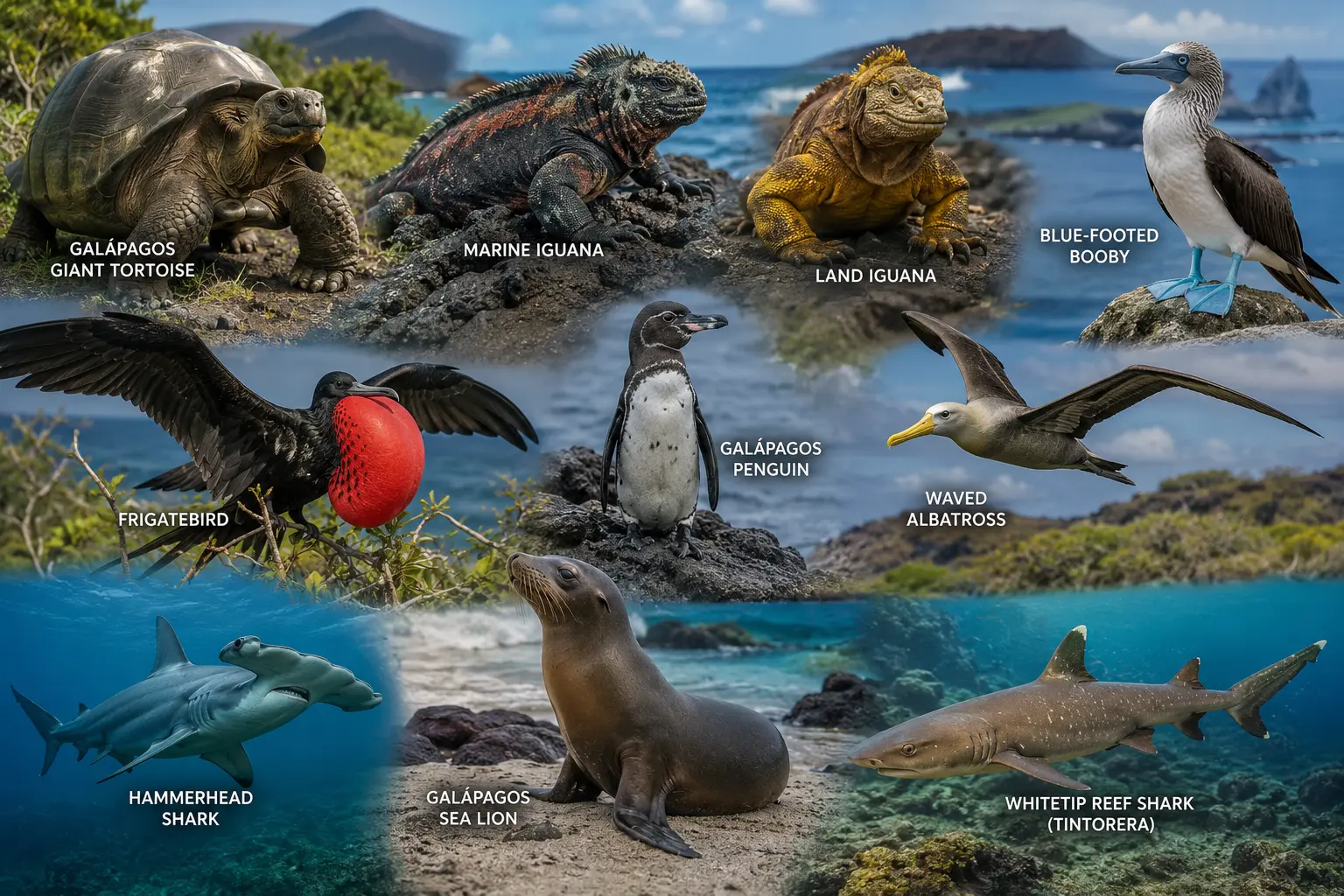
Galápagos Wildlife Quick Reference Guide
| Animal | Category | Where to Find It |
|---|---|---|
| ➜ Galápagos Giant Tortoise | Reptile | Santa Cruz, Isabela, San Cristóbal |
| ➜ Marine Iguana | Reptile | Santa Cruz, Isabela, Fernandina, San Cristóbal |
| ➜ Land Iguana | Reptile | Santa Cruz, Isabela, North Seymour |
| ➜ Blue-Footed Booby | Bird | Santa Cruz, North Seymour, San Cristóbal |
| ➜ Frigatebird | Bird | San Cristóbal, North Seymour, Genovesa |
| ➜ Galápagos Penguin | Bird | Isabela, Fernandina |
| ➜ Waved Albatross | Bird | Española Island |
| ➜ Hammerhead Shark | Marine Life | Kicker Rock, Darwin, Wolf |
| ➜ Galápagos Sea Lion | Marine Life | San Cristóbal, Santa Cruz, Isabela |
| ➜ Whitetip Reef Shark (Tintorera) | Marine Life | Isabela, Santa Cruz, San Cristóbal |
Reptiles of the Galápagos
Galápagos Giant Tortoise
The Galápagos Giant Tortoise is the most iconic animal in the archipelago. Some individuals can live for more than 100 years and weigh over 250 kilograms, making them one of the largest tortoise species on Earth.
Marine Iguana
The Marine Iguana is the world’s only sea-going lizard. It has evolved the remarkable ability to dive into the ocean and feed on algae, a unique adaptation found nowhere else.
Land Iguana
Known for its golden-yellow coloration, the Land Iguana inhabits dry volcanic landscapes. These prehistoric-looking reptiles are among the most fascinating endemic species in the Galápagos.
Travel Tip: Many of these reptiles can only be found on specific islands. Before planning your route, review the Galápagos ferry routes and practical travel information to determine the most efficient way to visit multiple islands.
Birds of the Galápagos
Blue-Footed Booby
Famous for its bright blue feet, this charismatic seabird performs an elaborate courtship dance. It is one of the most photographed and recognizable species in the Galápagos Islands.
Frigatebird
Male Frigatebirds inflate a spectacular red throat pouch during mating season. Their graceful flight and enormous wingspan make them one of the most impressive birds in the archipelago.
Galápagos Penguin
The Galápagos Penguin is one of the only penguin species found north of the equator. It survives thanks to the cool ocean currents that flow around the western islands.
Waved Albatross
Found almost exclusively on Española Island, the Waved Albatross is known for its elegant courtship displays and impressive wingspan, which can exceed two meters.
Marine Life in the Galápagos
Hammerhead Shark
Schools of Hammerhead Sharks are among the most sought-after wildlife encounters in the Galápagos. Their distinctive head shape makes them instantly recognizable underwater.
Galápagos Sea Lion
Playful, curious, and often fearless around humans, Galápagos Sea Lions are commonly seen resting on beaches, docks, and waterfront promenades throughout the islands.
Whitetip Reef Shark (Tintorera)
These reef sharks are frequently observed resting in shallow waters and lava channels. They are among the easiest shark species to spot during island excursions.
Which Galápagos Island Is Best for Wildlife Viewing?
Each island offers unique wildlife experiences. Santa Cruz provides excellent accessibility and biodiversity, Isabela combines volcanic landscapes with rare species, and San Cristóbal is famous for its sea lion colonies and seabird populations.
Many travelers combine routes such as Santa Cruz to Isabela and Santa Cruz to San Cristóbal to experience a wider variety of habitats and wildlife during a single trip.