Meeting the Galápagos Marine Iguana: The World’s Only Seafaring Lizard
Few animals embody the strange, wonderful logic of evolution quite like the Galápagos marine iguana (Amblyrhynchus cristatus). Sprawled across volcanic rocks, looking almost prehistoric, these creatures were famously dismissed by Charles Darwin as clumsy and unattractive. Yet a closer look reveals one of the most remarkable success stories in the animal kingdom: the only lizard on Earth that has learned to live, swim, and feed in the sea. Anyone planning a Galápagos cruise should keep an eye out for them along nearly every coastline, often resting in groups near the shore where many ferries dock.| Feature | Details |
|---|---|
| Scientific Name | Amblyrhynchus cristatus |
| Average Length | 60–130 cm (24–51 in) |
| Maximum Weight | Up to 12 kg (26 lbs) |
| Lifespan | Typically 10–15 years, occasionally exceeding 20 years |
| Diet | Mostly marine algae |
| Dive Duration | Usually 5–10 minutes, up to 1 hour |
| Conservation Status | Vulnerable (IUCN) |
| Distribution | Galápagos Archipelago |
Where They Come From: An Evolutionary Journey
Scientists believe the ancestors of today’s marine iguanas arrived in the archipelago millions of years ago, likely drifting from mainland South America on rafts of vegetation carried by ocean currents. Once established on these isolated volcanic islands, the iguanas began a long process of adaptation. Researchers estimate that the marine iguana branched off from its land-based relatives roughly 5.7 million years ago, eventually becoming a completely distinct species suited to a life shaped by rock, surf, and sun. Because the islands offered limited food on land, these early iguanas turned to the ocean’s most abundant resource: algae growing on submerged volcanic rock. Over time, their bodies transformed to make this possible.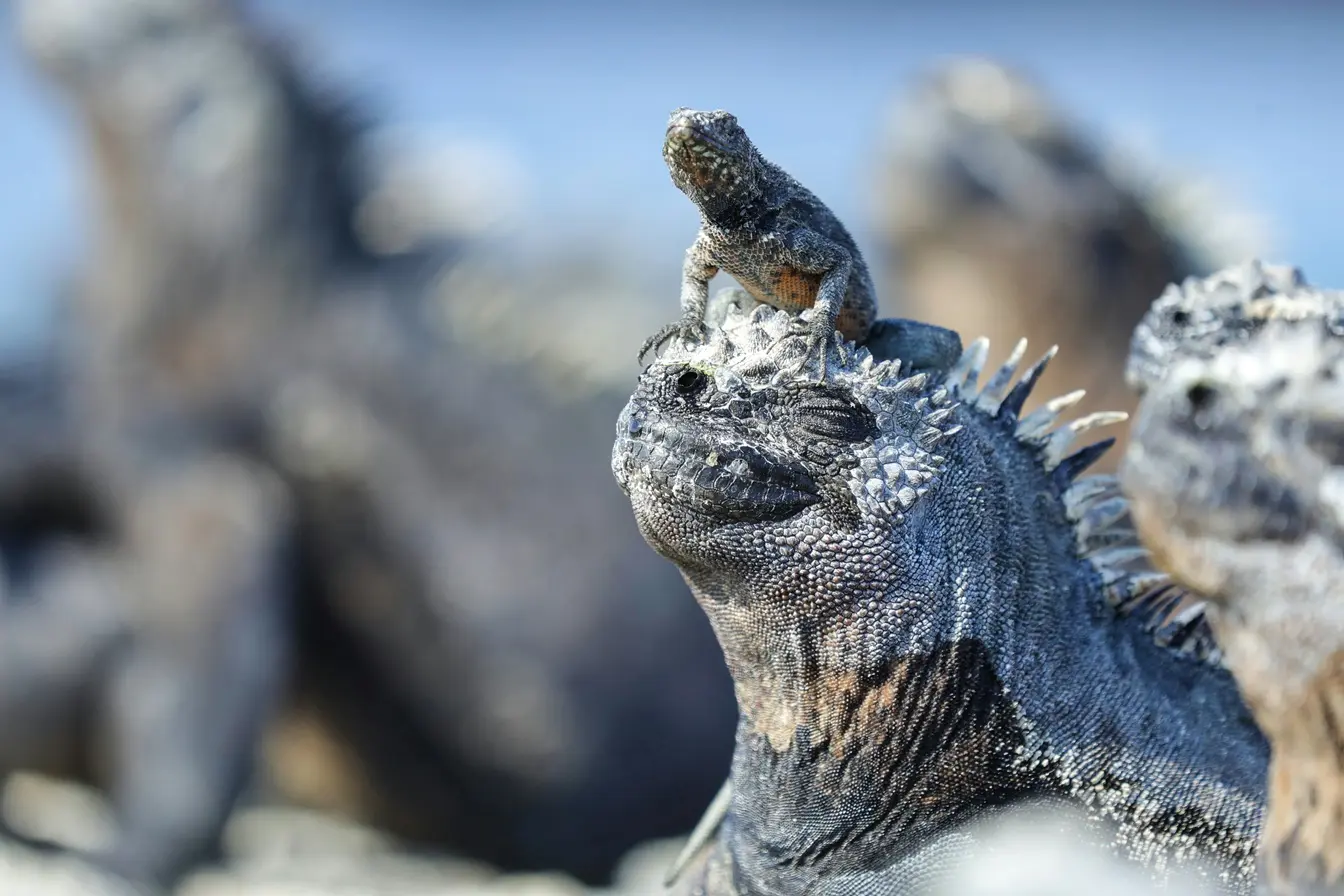
Built for the Ocean: Key Physical Adaptations
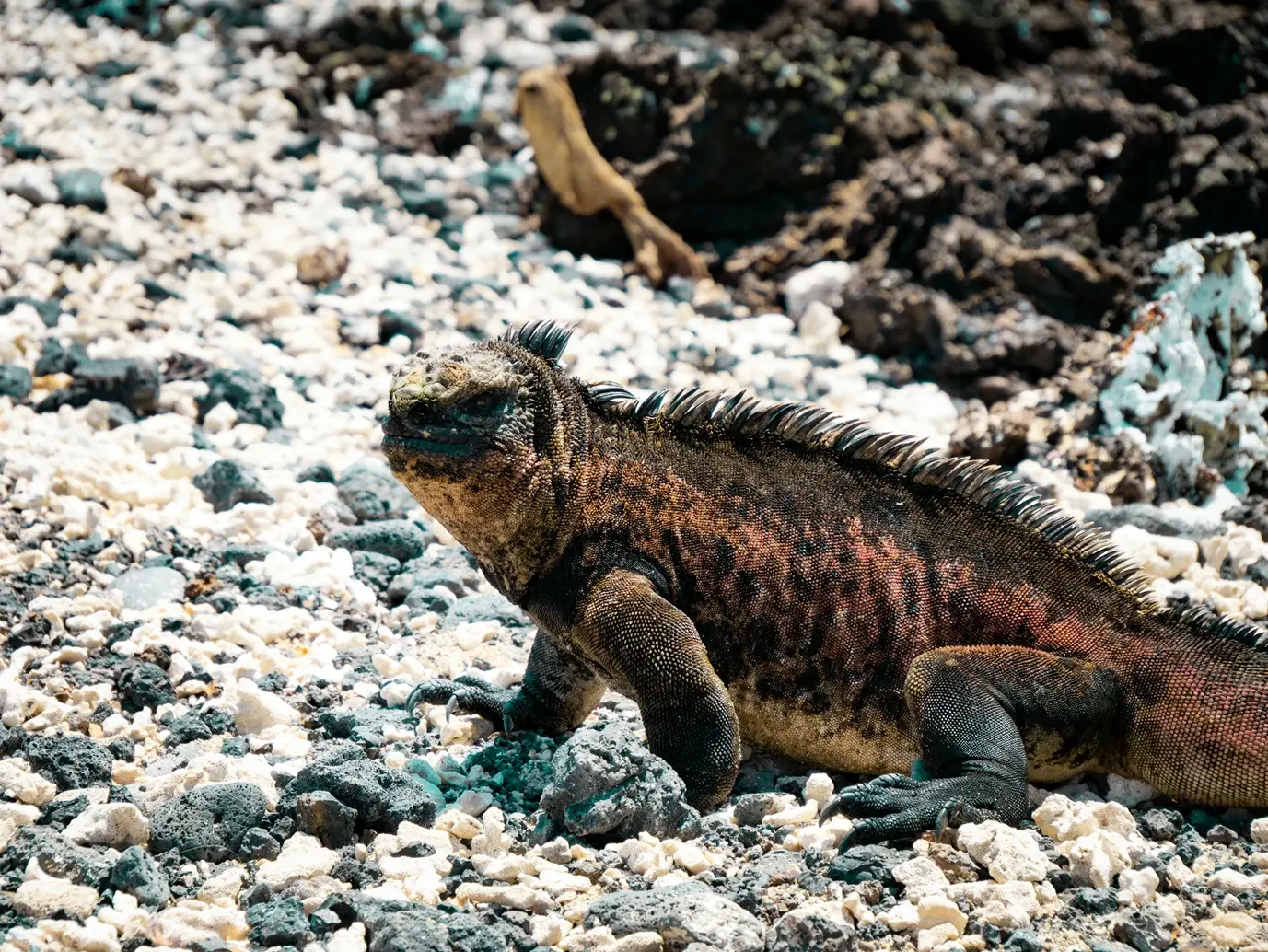
Several striking features set the marine iguana apart from its terrestrial cousins, each one a direct response to life along the coast:- A flattened, paddle-like tail that acts as a rudder, allowing the iguana to dive and maneuver through the water with surprising grace.
- Sharp, curved claws that let them grip slick underwater rocks tightly, even in strong currents, while they scrape algae loose with their flattened snouts and specialized teeth.
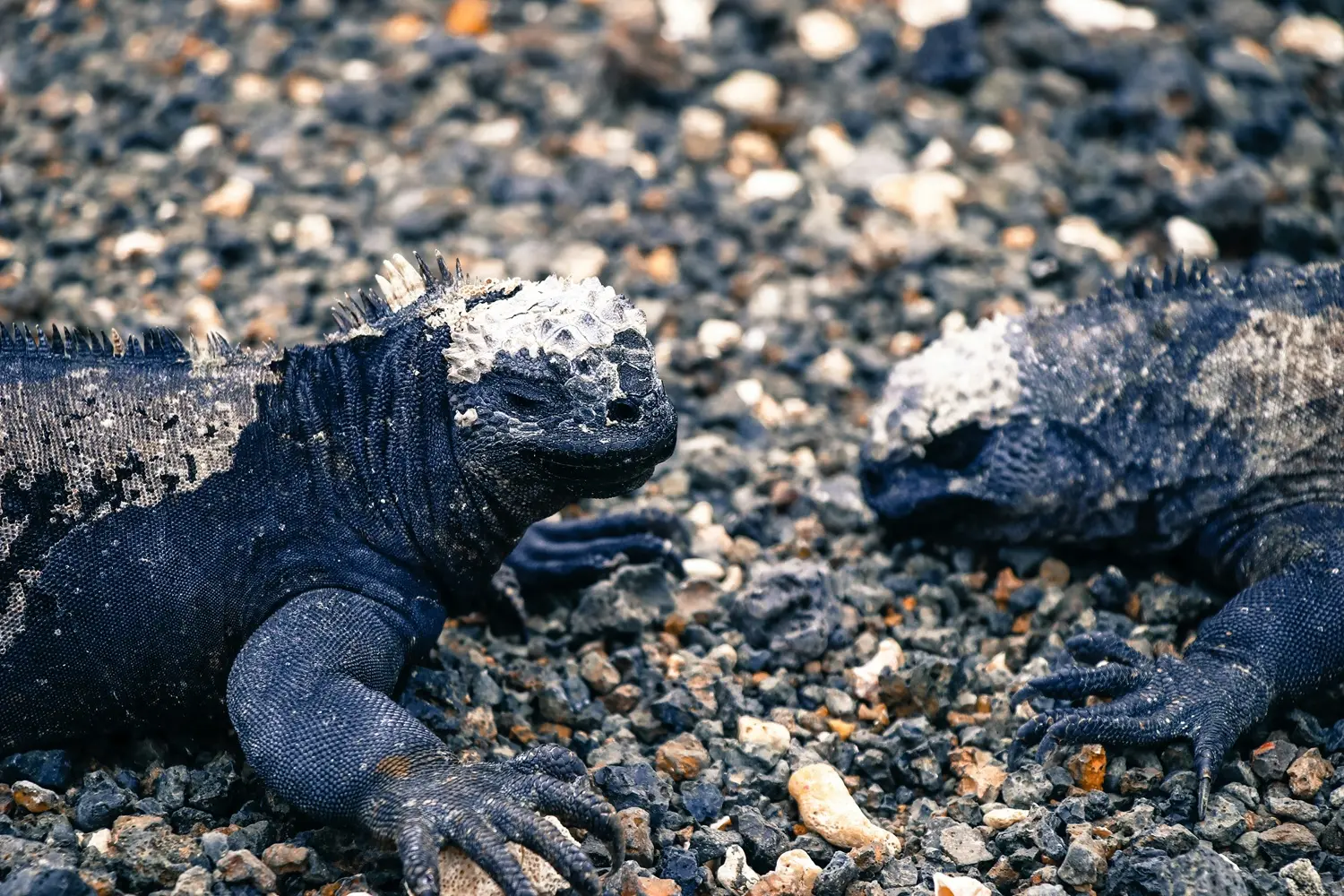
- Dark, almost black skin, which helps the iguanas absorb sunlight quickly after a swim, since they can lose up to 10°C of body heat during a single dive.
- Salt-filtering glands near the nostrils that remove excess salt from the bloodstream, which the iguana then expels in a distinctive “sneeze,” often leaving a crust of salt crystals around its nose.
A Body That Shrinks: Surviving El Niño
Perhaps the most astonishing adaptation of the marine iguana is its response to food scarcity during El Niño events, when warmer waters drastically reduce the algae available along the coast. In these periods, marine iguanas actually shrink in length, a process linked to the reabsorption of bone tissue. Once algae become abundant again, the iguanas gradually regrow to their original size. This remains one of the only documented cases of an adult vertebrate repeatedly changing its skeletal size in response to environmental conditions, and some individuals have even been observed supplementing their diet with land vegetation or small crustaceans during especially harsh El Niño years.Eleven Subspecies, One Island Story
Marine iguanas are found across nearly the entire archipelago, but they’re far from uniform. Genetic and morphological studies have identified eleven distinct subspecies, each tied to a specific island or group of islands, with notable differences in size, color, and pattern. The iguanas of Santiago tend to be more greenish, while those on Española display vivid red and turquoise tones during certain seasons, earning them the nickname “Christmas iguanas.” One of the most striking subspecies, found on northern San Cristóbal, was even named after a famous movie monster due to its unusually large size and dramatic coloring.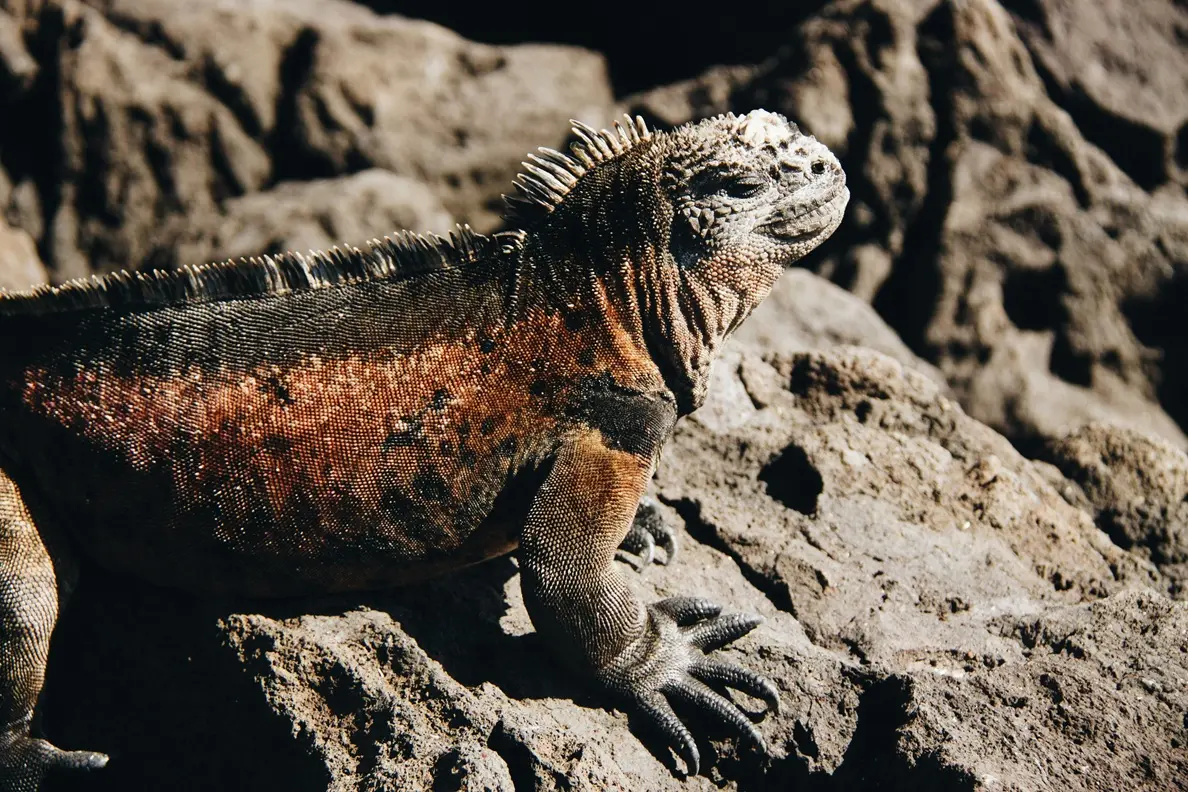
Marine Iguana Subspecies Comparison
| Island | Notable Characteristics | Coloration |
|---|---|---|
| Española | Medium-sized individuals | Red and turquoise during breeding |
| Santiago | Robust populations | Greenish-black |
| San Cristóbal | Largest subspecies | Dark gray to reddish |
| Fernandina | Numerous colonies | Black |