September is the month when the Galápagos archipelago behaves least like a tropical paradise and most like an intense cold-water marine system. Sea surface temperatures reach their lowest levels of the year, southeast trade winds peak, and overcast skies (known locally as garúa) cover the islands. While sunny beach seekers might be surprised by these cool conditions, marine biology enthusiasts consider September the single most rewarding window for wildlife encounters across the entire equatorial Pacific.
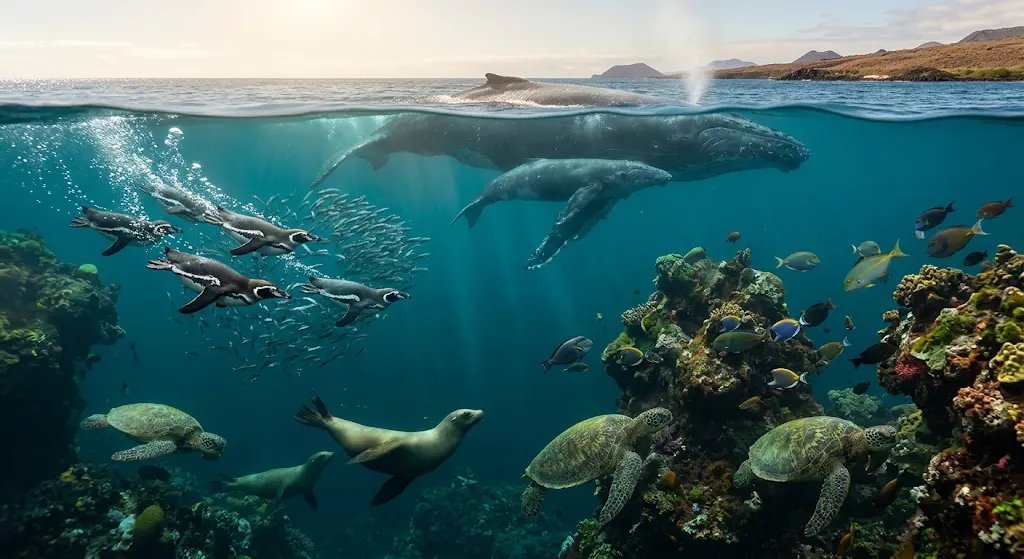
This biological surge is driven by oceanography. Between June and November, the deep Equatorial Undercurrent—the Cromwell Current—hits the underwater volcanic slopes of Isabela and Fernandina. Forced upward, this deep water brings cold, nutrient-packed currents directly into the sunlit surface layer. This upwelling triggers massive plankton blooms that feed krill, sardines, and small fish, setting off a rich food chain: Galápagos penguins start nesting, flightless cormorants begin courtship, resident whales gather to feed, and scalloped hammerhead sharks form large schools.
These ecological benefits come with clear practical trade-offs. Sea temperatures in the western channels can drop below 17 °C (62 °F), making thick wetsuits essential for snorkelling. Plankton blooms lower underwater visibility, and strong trade winds create the roughest sea conditions of the year for inter-island speedboat transfers. Understanding these seasonal realities helps travellers plan a comfortable and successful expedition.
This guide breaks down everything you need to know about September in Galápagos: marine mammal movements, penguin breeding cycles, island-by-island wildlife distribution, inter-island ferry logistics during peak swell, and essential National Park regulations.
| Specification / Metric | Detail / Value in September |
|---|---|
| Season classification | Cool / garúa season (June–November); annual minimum sea temperature. |
| Air temperature range | 19–26 °C (66–79 °F), characterized by persistent overcast skies. |
| Sea surface temperature | 20–24 °C in central islands; 16–19 °C in western upwelling zones. |
| Prevailing winds | Southeast trade winds at annual peak; strongest ocean swells. |
| Rainfall pattern | Light drizzle in the highlands (garúa); coastal areas stay dry. |
| Primary whale species | Bryde’s whale (Balaenoptera edeni), a resident species year-round. |
| Other recorded cetaceans | Blue whales, sperm whales, humpbacks, orcas, and bottlenose dolphins. |
| Galápagos penguin population | Estimated 1,200–2,000 individuals; listed as Endangered (IUCN). |
| Penguin distribution | ~95% on Isabela and Fernandina; small populations near Bartolomé. |
| Penguin breeding trigger | Sea surface temperatures under 24 °C; allows up to three clutches per year. |
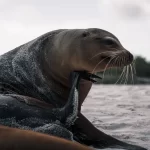
| Sea lion activity | Peak pupping season; dominant bulls actively defend beach territories. |
| Recommended wetsuit | 3 mm for central islands; 5 mm full suit for western snorkelling and diving. |
| Inter-island ferry time | 2.0 to 2.5 hours per leg via public speedboat transfers. |
| Official entry fees | National Park Fee: US$200 (foreigners); INGALA Transit Card: US$20. |
Oceanography: The Cromwell Current and Cold Water Upwelling
Located roughly 900 kilometres off the coast of mainland Ecuador, the Galápagos Islands sit at the intersection of three major surface currents: the cold Humboldt Current from the south, the warm Panama Current from the north, and the South Equatorial Current flowing west. However, the most critical force in September operates far below the surface.
The Cromwell Current moves eastward along the equator between 50 and 300 metres below the surface. When it hits the western underwater slopes of Isabela and Fernandina, the cold current is forced straight up. This topographic upwelling delivers nutrient-dense waters into the sunlit surface layer. Strengthened by September’s trade winds, this nutrient boost triggers rapid food chain growth from plankton up to apex predators.
This upwelling creates a dramatic biological difference between the eastern and western islands. Chlorophyll levels in the Bolívar Channel between Isabela and Fernandina far exceed those in the central islands. Because of this, cold-water specialists like the Galápagos penguin and the flightless cormorant live almost exclusively along these western shores.
September Weather Patterns: Garúa Mists and Strong Winds
The characteristic garúa is a fine coastal mist that develops when cool ocean temperatures chill the humid air above. In September, this mist hangs over the highlands of inhabited islands like Santa Cruz and San Cristóbal. On Santa Cruz, conditions can change quickly from cloudy shores in Puerto Ayora to misty highlands near Santa Rosa.
Coastal areas remain mostly dry, seeing only occasional light drizzle rather than heavy downpours. Overcast skies dominate the weather. This cloud cover lowers ambient light for photography and makes cool sea breezes feel colder, so 22 °C (72 °F) feels quite crisp after swimming.
Despite the persistent clouds, equatorial UV radiation remains high. Skipping sun protection can easily lead to severe sunburns. Always use reef-safe sunscreen, wear wide-brimmed hats, and use rash guards while snorkelling.
Wind is the biggest factor for inter-island travel. Strong trade winds generate choppy seas across open channels. Preparing in advance with seasickness tips for Galápagos ferries is highly recommended during this month.
Cetaceans in Galápagos: Resident Species vs. Migratory Sightings
Whale and dolphin sightings concentrate heavily along the western upwelling zones in September. While over twenty cetacean species use the Galápagos Marine Reserve, a few key species account for most encounters.
The Bryde’s whale is the most common baleen whale in the archipelago. Unlike migratory species, Bryde’s whales stay in Galápagos waters year-round to feed on small fish. They are frequently spotted in the deep channels between Isabela and Fernandina. Blue whales and sperm whales also move into these deep waters during September to feed on abundant food supplies.
Humpback whales cause frequent confusion among visitors. While humpbacks migrate through the archipelago between June and October, their main breeding grounds are along coastal Ecuador near Puerto López. Humpback sightings in Galápagos are occasional, not guaranteed.
Orca pods roam the island coasts unpredictably, hunting sea lions and rays. Meanwhile, resident bottlenose and common dolphins are regularly seen jumping alongside inter-island ferry boats.
The Galápagos Penguin: Breeding in Equatorial Waters
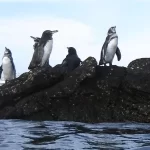
The Galápagos penguin (Spheniscus mendiculus) is the only penguin species living north of the equator. Standing just 49 centimetres tall, it is one of the smallest penguins in the world. With an estimated population of 1,200 to 2,000 individuals, the species is listed as Endangered.
Unlike polar penguins that breed on fixed seasonal schedules, Galápagos penguins breed whenever food is abundant. The main trigger is cold water: when sea surface temperatures drop below 24 °C (75 °F), penguins start nesting in shaded volcanic crevices to protect their eggs from the equatorial sun.
Because September brings cold water, penguin activity reaches its yearly peak. Over 95% of the population stays near Isabela and Fernandina, though small groups also nest around Bartolomé Island. To plan a visit focused on these endemic birds, check out our complete Galápagos penguin guide.
Wildlife Activity Across Other Key Species
September’s nutrient-rich waters fuel high activity across many endemic species:
- Flightless Cormorant: Active courtship and nest building along the rocky shores of Isabela and Fernandina.
- Galápagos Sea Lions: Peak pupping season on San Cristóbal and Española beaches, accompanied by territorial bull activity.
- Blue-Footed Boobies: High foraging activity and courtship dances, detailed in our guide to the blue-footed booby.
- Marine Iguanas: Feeding heavily on underwater algae. Learn more about their adaptations in our overview of the marine iguana of Galápagos.
- Scalloped Hammerhead Sharks: Cold water brings large schools closer to diving sites like Gordon Rocks and Kicker Rock.
Island Geography: Where to Find Wildlife
Wildlife distribution in September falls into three main geographical regions:
The Western Region (Isabela and Fernandina) holds the highest marine life density, including penguins, flightless cormorants, and feeding whales. Reaching remote western sites requires a liveaboard cruise, though day tours out of Puerto Villamil cover key nearby spots.
The Central Region (Santa Cruz, Bartolomé, Santiago) forms the core of land-based travel. It offers fantastic coastal wildlife and easy day-trip access to penguin sites on Bartolomé.
The Southeastern Region (San Cristóbal, Española) hosts the largest sea lion nurseries and seabird colonies, including the waved albatross. To navigate between these hubs, review the available inter-island ferry routes in Galápagos.
Inter-Island Ferries: Navigating September Swells
Public inter-island transport relies on 20- to 40-passenger speedboats operating out of Santa Cruz. Travel times average 2 to 2.5 hours per leg, plus 30 minutes for water-taxi transfers at each port.
September sees the roughest sea conditions of the year. Strong ocean swells create noticeable motion on the open-water route to Isabela. To minimize seasickness, try to secure the best seats on Galápagos ferries toward the back of the vessel.
Although September falls outside peak summer crowds, booking ferry legs early helps maintain a smooth schedule. Review the differences between buying ferry tickets online vs. at the port before finalizing your itinerary.
National Park Rules and Entry Regulations
All visitors to the Galápagos National Park must be accompanied by a certified naturalist guide when visiting protected sites. Rules require keeping a minimum distance of two metres from all wildlife. Touching or feeding animals is strictly prohibited.
Whale watching rules require boats to stay at least 100 metres away from cetaceans. Swimming with whales is strictly forbidden. Current official entry fees include:
- National Park Entrance Fee: US$200 for international adults.
- INGALA Transit Control Card: US$20 per person.
- Isabela Municipal Fee: US$10 upon arrival at Puerto Villamil.
Packing Essentials and Suggested Itinerary
Pack a 3 mm to 5 mm wetsuit, a windproof jacket, dry bags, and reliable sun protection. A balanced 8-day land-based itinerary includes: 3 nights in Santa Cruz, 3 nights in Isabela, and 2 nights in San Cristóbal. Check the departure times for the Santa Cruz to Isabela ferry to connect your island stays easily.
Frequently Asked Questions
Is September a good month to visit the Galápagos?
Yes. September offers incredible marine life encounters, active penguin nesting, and fewer crowds compared to peak summer months.
What is the sea water temperature in September?
Water temperatures range between 20–24 °C in central areas and 16–19 °C in the west. A 3 mm to 5 mm wetsuit is recommended.
Where can you see penguins in September?
Over 95% live around Isabela and Fernandina. Day tours from Santa Cruz to Bartolomé Island also offer reliable sightings.
Are visitors allowed to swim with whales in Galápagos?
No. National Park rules strictly prohibit entering the water near whales to protect the animals and ensure visitor safety.
How rough are the ferry rides between islands in September?
September experiences the highest swells of the year. Taking motion sickness medication before boarding is strongly advised.
How much are the entry fees for Galápagos?
International adults pay US$200 for the National Park entry fee plus US$20 for the INGALA Transit Control Card.