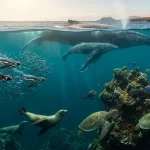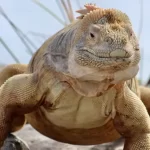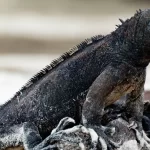
Most travel lists promise experiences you could technically have somewhere else, just with better marketing. Galápagos is different. This is one of the only places on Earth where a penguin, a marine iguana, and a tropical coral reef share the same square mile of ocean — and where the wildlife, having evolved for millions of years without natural predators, simply doesn’t move out of your way.
That biological quirk is the reason a Galápagos itinerary reads less like a checklist and more like a series of small miracles: a sea lion pup napping on the trail you’re hiking, a booby performing an elaborate courtship dance for an audience that includes you, a volcano that’s still audibly, geologically alive. Nothing on this list is staged. Almost nothing here can be replicated anywhere else on the planet.
What follows isn’t a ranked “top 10.” It’s a working inventory — 40 specific, doable experiences pulled from wildlife encounters, volcanic landscapes, water sports, and island history — organized so you can build an itinerary around whichever category matters most to you. Some take an afternoon. A few require a live-aboard dive boat and a real tolerance for open water. All of them are reasons the archipelago keeps pulling people back.
| Category | Quick Facts |
|---|---|
| Topic Scope | Wildlife encounters, volcanic hikes, snorkeling and diving, water sports, island history, and rare natural phenomena across the inhabited and uninhabited islands |
| Typical Trip Length | 5–10 days covers most of this list; a 3-day land-based trip covers roughly a third of it |
| Difficulty / Cost Level | Ranges from easy and low-cost (beach walks, town visits) to strenuous and premium-priced (the Sierra Negra hike, live-aboard diving with hammerheads and whale sharks) |
| Key Requirements | Galápagos National Park entry fee, a certified naturalist guide for park-controlled visitor sites, and inter-island ferry or flight connections between islands |
| Best Time to Go | Year-round destination; the dry season (June–December) and the warm season (January–May) each favor different wildlife and activities (see comparison below) |
Iconic Wildlife Encounters You Won’t Find Anywhere Else
Galápagos wildlife doesn’t perform on a schedule, but certain animals are reliably tied to specific islands and seasons, which is what makes this section the backbone of most itineraries.
- Swim with Galápagos penguins. The world’s only penguin species living at the equator gathers year-round around Isabela Island and, especially during the dry season, around Bartolomé Island, where snorkelers regularly share the water with them near Pinnacle Rock.
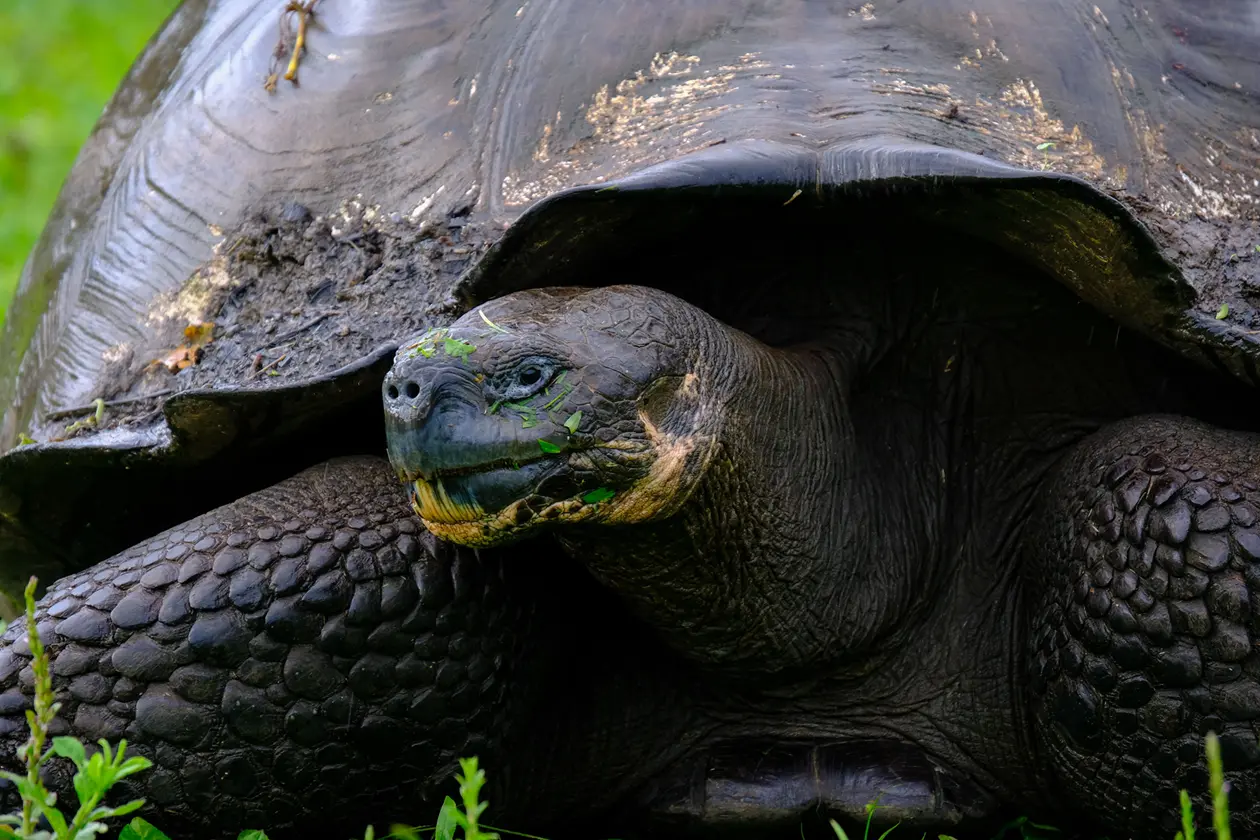
- Meet giant tortoises in the wild. San Cristóbal, Isabela, and the Santa Cruz highlands all have reserves where 250-kilogram giant tortoises roam freely, grazing and wallowing in mud pools at close range.
- Watch tortoises get cleaned by finches. At breeding stations like the one in Puerto Villamil, tortoises stretch their necks and legs so small birds can pick parasites from their skin — a textbook piece of mutualism playing out in real time.
- Snorkel alongside marine iguanas. Marine iguanas are clumsy on land but genuinely graceful swimmers, and around beaches like Tortuga Bay they’ll often join snorkelers for a few minutes before diving for algae.
- Watch the blue-footed booby’s mating dance. The high-stepping courtship display of the blue-footed booby is one of the most photographed rituals in the islands; colonies are easy to find on North Seymour, Española, and San Cristóbal, and Punta Pitt on San Cristóbal is the rare site where blue-footed, Nazca, and red-footed boobies all overlap.
- Watch waved albatrosses court on Española. Found nowhere else on Earth, the waved albatross performs an elaborate bill-clacking courtship ritual at Punta Suárez, above cliffs where waves surge 23 meters into the air.
- Dive with whale sharks off Darwin and Wolf. The largest fish in the ocean passes through the far-northern islands to feed on krill, and live-aboard dive trips to Darwin and Wolf remain the most reliable way to see one up close.
- Kayak or dive near hammerhead sharks at Gordon Rocks. Schools of scalloped hammerhead sharks gather to feed and clean themselves along this reef off Santa Cruz, visible to both divers and kayakers paddling the surface.
- Swim with Galápagos sea lions. The smallest pinnipeds in the world, weighing 30–80 kilograms as adults, are also the most playful — sea lions at spots like North Seymour and Divine Bay will often approach snorkelers out of pure curiosity.
- Spot the “Godzilla” marine iguana subspecies. Punta Pitt on San Cristóbal is home to Amblyrhynchus cristatus godzilla, a marine iguana subspecies that can exceed a meter in length and turns brilliant red and green during December and January.
- See the endemic Santa Fe land iguana. Found only on Santa Fe Island, this land iguana subspecies is paler and sharper-snouted than its relatives on other islands.
- Watch frigatebirds inflate their red throat pouches. Males spend roughly 30 minutes inflating a heart-shaped scarlet gular sac to attract mates; North Seymour, San Cristóbal, and Genovesa all host large frigatebird colonies, and with practice you can tell great frigatebirds (green sheen) from magnificent frigatebirds (purple sheen) by their plumage alone.
- Find the Galápagos short-eared owl hunting by daylight. On islands without the Galápagos hawk, this endemic owl subspecies has become diurnal; the best place to see one is along the Prince Philip’s Steps trail on Genovesa.
- Watch swallow-tailed gulls nest on sea cliffs. The cliffs of South Plaza provide ideal habitat for nesting colonies of swallow-tailed gulls, Nazca boobies, and red-billed tropicbirds, all visible from a single clifftop trail.
- Photograph a mobula ray leaping from the water. Both giant oceanic mobula rays and devil rays surface unpredictably while boats sail between islands, often landing with an audibly loud splash.
- Snorkel with sea turtles. Sheltered coves like Divine Bay near Puerto Ayora are known for slow-moving, camera-friendly Pacific green sea turtles that tolerate snorkelers at close range.
- Watch white-tip reef sharks rest along a lava trail. The Tintoreras trail near Puerto Villamil crosses black lava rock where white-tip reef sharks can often be seen resting motionless in shallow channels below.
- Count flamingos in a coastal lagoon. Brackish lagoons on the outskirts of Puerto Villamil hold the largest concentration of American flamingos in the islands; early morning offers the best light and the calmest water.
- Find the rare marine-land iguana hybrid. On South Plaza, the ranges of marine and land iguanas overlap in a small patch of territory, occasionally producing a genuinely rare intergeneric hybrid.
- See three of the four Galápagos iguana types in one trip. Marine, land, and Santa Fe land iguanas are all reachable on a standard multi-island itinerary; only the pink iguana of Wolf Volcano remains off-limits to visitors.
Volcanoes, Lava Fields, and Geological Marvels
Galápagos is a live volcanic system, and several of its most memorable sites are less about wildlife than about standing on geology that is still, quite literally, forming.
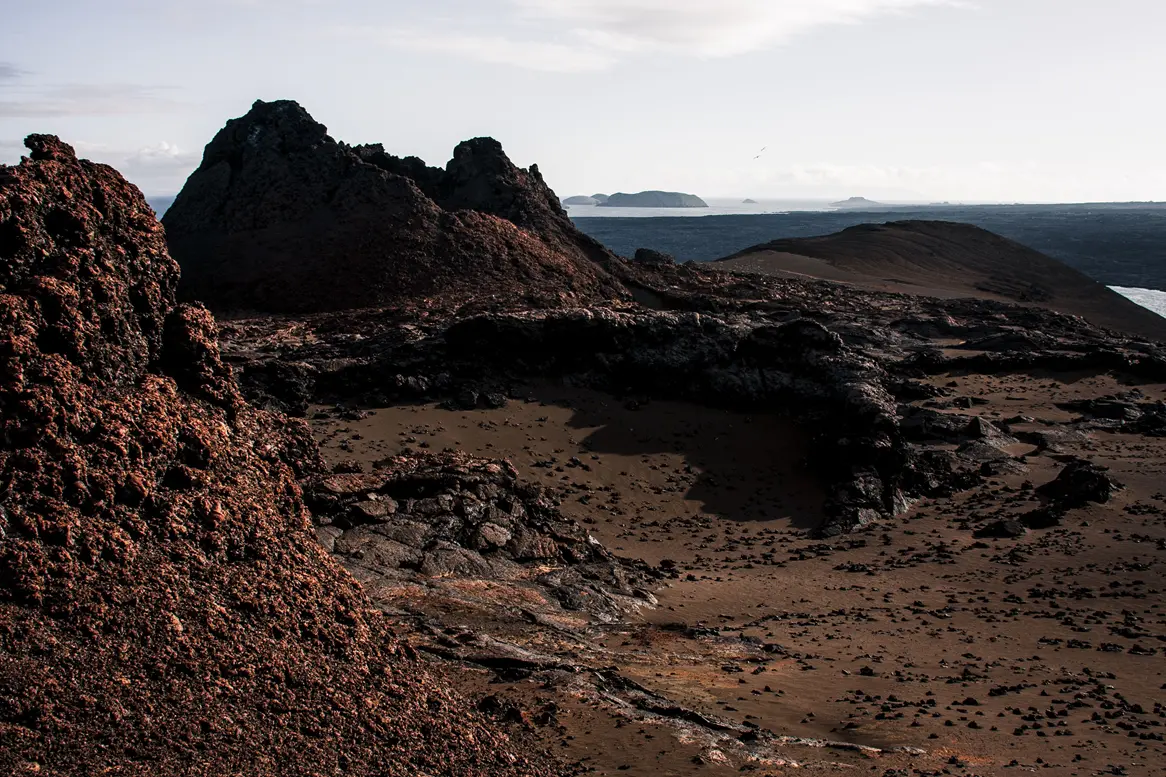
- Hike the rim of Sierra Negra’s caldera. This active volcano on Isabela hides a six-mile-wide crater of cooled crust over active lava; the trail climbs from forest through recent lava fields before reaching a rim view over Isabela and its neighboring islands.
- Walk a young pahoehoe lava field at Sullivan Bay. The most recent eruption here was roughly 130 years ago, leaving a field of swirled, ropey lava so fresh that pioneer plants like the endemic lava cactus and a weed-like colonizer called mollugo are only just beginning to take hold.
- See a coastline lifted by a 1954 earthquake. At Urbina Bay on Isabela, a seismic uplift raised the shoreline more than 16 feet in a single event, stranding a coral reef and marine life above the new waterline.
- Photograph Pinnacle Rock on Bartolomé. This spearlike volcanic obelisk rising from the shoreline is arguably the single most photographed landmark in the archipelago, framed by the same waters where penguins and sea lions swim.
- Explore North Seymour’s seabed-uplift terrain. Raised from the ocean floor by tectonic activity rather than a volcanic eruption, this flat island’s low profile and silvery palo santo forest give it a landscape unlike anywhere else nearby.
- Search for whale bones at Islote Mosquera. This small islet between Baltra and North Seymour combines coral reefs, white sand, and black lava rock — and occasionally the bleached skeleton of a stranded pilot whale.
Beaches, Snorkeling, and Adventure Sports
Between hikes and wildlife stops, Galápagos also delivers some of the best beginner-to-advanced water sports in the Pacific.
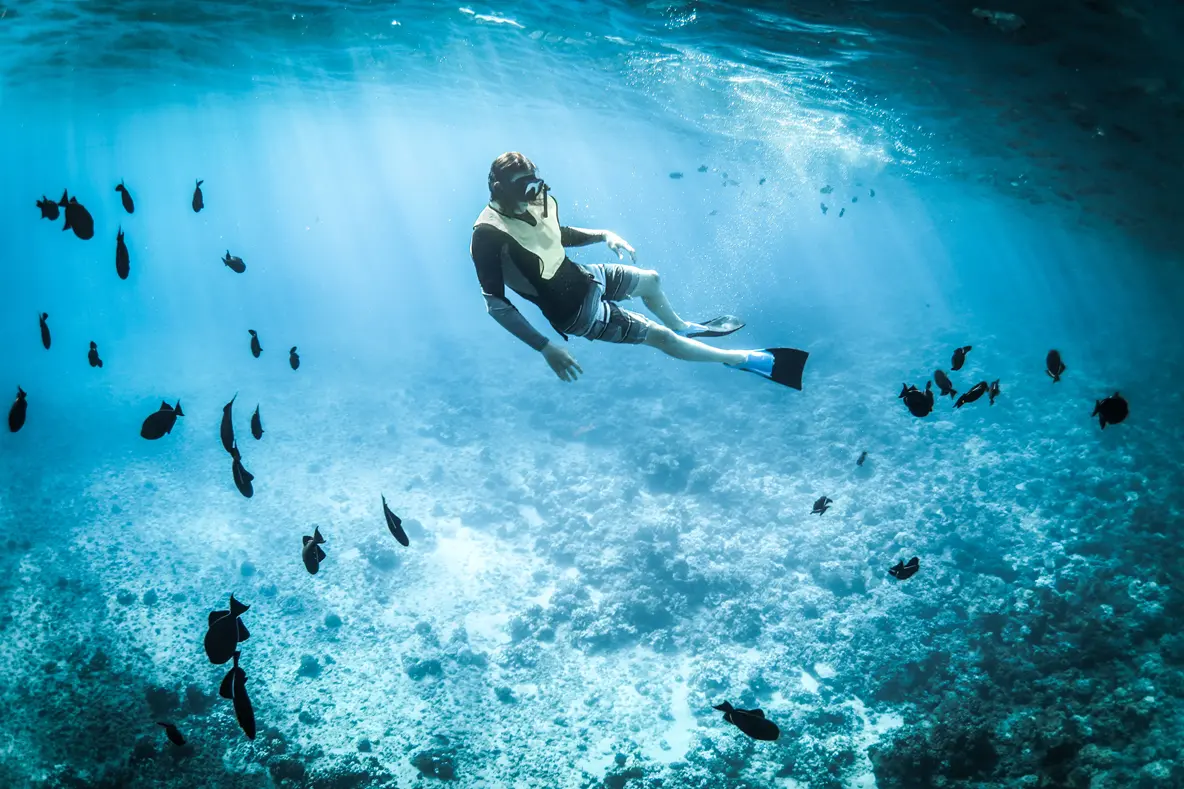
- Surf the breaks at Tortuga Bay. Known internationally among surfers, this Santa Cruz beach offers both left and right breaks and is rarely crowded — though sea turtles, sharks, and rays share the water, so awareness matters.
- Swim in the volcanic pools of Las Grietas. A trail through mangroves, cactus, and old salt-mining ruins leads to a series of flooded volcanic fissures where fresh highland water meets incoming seawater, creating clear, cool swimming pools.
- Kayak Garrapatero Beach. Calm bay waters and reputedly the finest sand in Galápagos make this Santa Cruz beach a favorite for swimming and kayaking, with a brackish lagoon nearby that attracts stilts, plovers, and flamingos.
- Collect a five-beach color palette. Rábida’s red sand comes from iron-rich volcanic scoria; Floreana’s green sand gets its tint from olivine crystals; Tortuga Bay is classic white; Puerto Egas is volcanic black; Bartolomé’s beach runs gold — five distinct colors, five different geological stories.
- Dive the central islands’ circuit. A standard dive itinerary through Santa Fe, North Seymour, Daphne Minor, Mosquera Islet, Gordon Rocks, and Cousin’s Rock covers garden eels, sea turtles, rays, white-tip sharks, and often curious sea lions.
- Cycle the Santa Cruz highlands. Quiet roads, minimal traffic, and giant tortoises grazing roadside make the descent from the Santa Cruz highlands toward the coast one of the more relaxed ways to cover ground on the island.
- Photograph all four Galápagos mangrove species. Red, white, black, and buttonwood mangroves can all be found around sites like Black Turtle Cove and the coastline near Puerto Ayora, each identifiable by its bark, roots, and flowers.
History, Legends, and Human Stories
Galápagos isn’t only a wildlife destination — its human history includes pirates, whalers, prisoners, and a wartime air base, and several visitor sites preserve that record in the landscape itself.
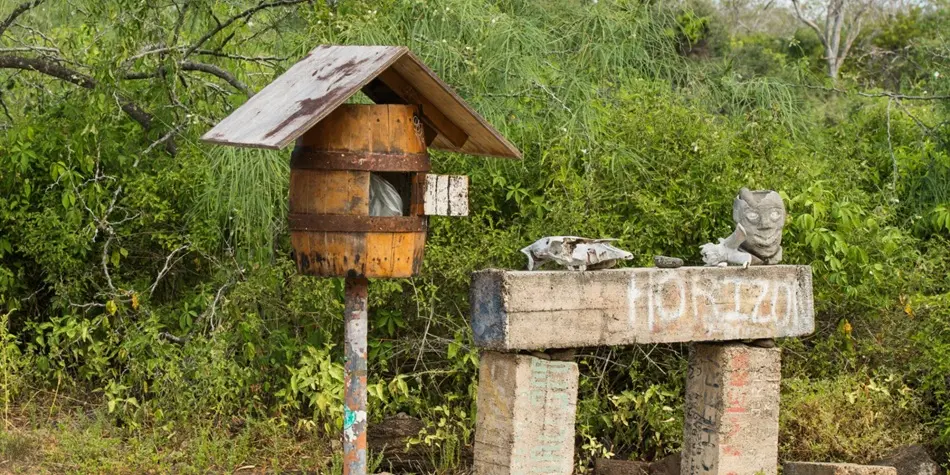
- Mail a letter the old whalers’ way at Post Office Bay. English whalers on Floreana started this barrel-based mail system in the 18th century for sailors on multi-year voyages; visitors still leave postcards today, hand-delivered by whoever picks them up next.
- Search for pirate ship names carved into rock at Tagus Cove. Isabela’s Tagus Cove was once a pirate hideout, and centuries-old ship names are still visible carved into the cliff face above a brackish pool.
- Learn about Baltra’s WWII airbase history. Once part of Santa Cruz before a volcanic fault split it off, Baltra hosted a U.S. Air Force base during World War II and later became the islands’ main airport.
- Visit the Wall of Tears penal colony ruins. Built stone by stone by prisoners between 1945 and 1959 on Isabela, this 25-meter wall stands as one of the darker chapters in Galápagos history.
- Find the Charles Darwin busts on San Cristóbal. A 1935 monument, cast from a plaster bust commissioned to commemorate Darwin’s arrival, still stands on the island where his voyage first touched Galápagos soil.
Rare Phenomena and Night Skies
A couple of experiences here have nothing to do with wildlife checklists — they’re about the archipelago’s position on the map and its unusually dark, clear skies.
- Photograph 0°0’0″ on a ship’s GPS. Cruises that cross the equator let passengers snap a photo of the exact coordinate reading — a small but satisfying souvenir of literally straddling two hemispheres.
- Watch for the sunset “green flash.” On a clear night with an unobstructed horizon, watch closely as the sun dips below the waterline; occasionally, a brief flash of green light appears at the very last moment.
Dry Season vs. Wet Season: Which Fits Your List
Because this list spans hiking, diving, and birdwatching, timing matters more here than on a typical beach trip.
| Factor | Dry Season (Jun–Dec) | Warm Season (Jan–May) |
|---|---|---|
| Sea conditions | Cooler, choppier water; stronger currents favor advanced snorkelers and divers | Warmer, calmer water; easier snorkeling for beginners and families |
| Wildlife highlights | Booby courtship displays; nutrient-rich waters bring larger marine life inshore | Giant tortoise nesting; marine iguanas turn bright color; calmer water for turtles |
| Land conditions | Garúa mist keeps highlands cool and green; coastal areas stay dry | Warm, sunny, with occasional short downpours; lush vegetation |
| Best for | Diving, hiking, whale shark season near Darwin and Wolf | Snorkeling, beach time, photographing color-changing iguanas |
Neither season is objectively better; it depends on whether this list’s diving and hiking items or its snorkeling and beach items matter more to your trip.
Where to Experience These Adventures: Practical Visitor Advice
Nearly everything on this list sits inside the Galápagos National Park, which means access is structured rather than freeform. Most visitor sites require a certified naturalist guide, a park entry fee paid on arrival, and either a multi-day cruise or a base in one of the inhabited towns — Puerto Ayora on Santa Cruz, Puerto Baquerizo Moreno on San Cristóbal, or Puerto Villamil on Isabela — from which day tours depart.
Getting between islands for a land-based itinerary generally means either a short domestic flight or the public inter-island ferry network, which is considerably cheaper and runs multiple times daily on the main routes. If you’re piecing together a self-guided trip — say, penguins and Pinnacle Rock from Santa Cruz, then Sierra Negra from Isabela a few days later — the ferry schedule effectively becomes your itinerary’s backbone. It’s worth checking current inter-island ferry routes before locking in dates, since crossing times and frequency vary by route and season.
Boat crossings between islands can run 1.5 to 3 hours through open water, and conditions vary with the season outlined above; if you’re prone to motion sickness, it’s worth reading up on managing seasickness on Galápagos ferries before booking a full multi-island land itinerary rather than a single-boat cruise.
For the higher-commitment items on this list — diving with whale sharks or hammerheads at Darwin, Wolf, or Gordon Rocks — a specialized live-aboard dive operator is generally required, since these sites sit far from the inhabited islands and involve currents unsuitable for casual snorkeling. For everything else, a mix of day tours and a few strategically timed inter-island crossings will realistically cover 30 or more items from this list in a week to ten days.
Final Thoughts
There’s a particular kind of vertigo that sets in on your third or fourth day in Galápagos, once you stop reaching for your camera every time a sea lion flops across your path. It isn’t boredom — it’s recalibration. The islands reset your baseline for what “wild” is supposed to look like, and by the time you’re home, ordinary parks and beaches feel oddly empty by comparison.
That recalibration is the actual souvenir. Long after the specific dates and boat names blur together, what stays is the memory of a marine iguana surfacing beside you mid-snorkel, or standing on a lava field still cooling from an eruption within living memory, or watching a bird perform a courtship ritual unchanged since long before anyone was there to film it. Few places compress that much unfiltered natural history into a single, reachable itinerary.
None of the 40 experiences above require luck so much as timing and planning — knowing which islands, which season, and which mode of transport get you there. Get that logistics layer right, and the wildlife largely does the rest, the way it has for millions of years, with or without an audience.
Frequently Asked Questions About Things to Do in Galápagos
How many days do I need to do most of these activities?
A week to ten days is generally enough to cover 30 or more items on this list, combining a few days on Santa Cruz, a stop on Isabela for Sierra Negra and the Wall of Tears, and a boat excursion or two to outlying islands like Bartolomé or North Seymour.
Do I need a guide for every activity on this list?
Most Galápagos National Park visitor sites — including all volcano hikes, uninhabited islands, and marine protected areas — legally require a certified naturalist guide. Town-based activities like biking, some beaches, and the inter-island ferries themselves don’t.
Is it possible to see whale sharks and hammerhead sharks without a live-aboard dive trip?
Hammerheads at Gordon Rocks are sometimes visible to snorkelers and kayakers on the surface, but reliably diving with either species, especially whale sharks near Darwin and Wolf, generally requires a specialized multi-day dive liveaboard.
What’s the best season for snorkeling versus hiking?
The warm season (January–May) brings calmer, clearer water that favors beginner snorkelers, while the dry season (June–December) suits hiking and diving better, though it comes with cooler water and stronger currents.
Can I do a land-based trip instead of a cruise and still see most of this list?
Yes. Basing yourself in Puerto Ayora, Puerto Villamil, or Puerto Baquerizo Moreno and connecting between islands by inter-island ferry covers the large majority of activities on this list, with a cruise mainly adding access to more remote dive sites and uninhabited islands.
How do I get between the main inhabited islands?
Short domestic flights and a public inter-island ferry network both connect Santa Cruz, San Cristóbal, and Isabela, with the ferry being the far cheaper option and running multiple times a day on the busiest routes.