The Whitetip Reef Shark: Galápagos’ Resident “Tintorera”
Wade into the shallow channel at Isabela Island’s Las Tintoreras and you’ll likely see them before you see anything else: four or five slender gray shapes, motionless on the sandy bottom, packed together like parked cars. These are whitetip reef sharks, and the islet takes its name directly from them — tintorera is the local word for the species. Nowhere else in the Galápagos can you get this close to a shark without a wetsuit, a boat, or a dive certification.
What makes the sighting easy is a quirk of its biology. Most sharks have to keep swimming to force water over their gills. The whitetip doesn’t. It can pump water through its mouth while lying still, which is why it spends daylight hours stacked in caves and crevices instead of patrolling open water. Night is a different animal entirely — that’s when it leaves the ledge and starts hunting.
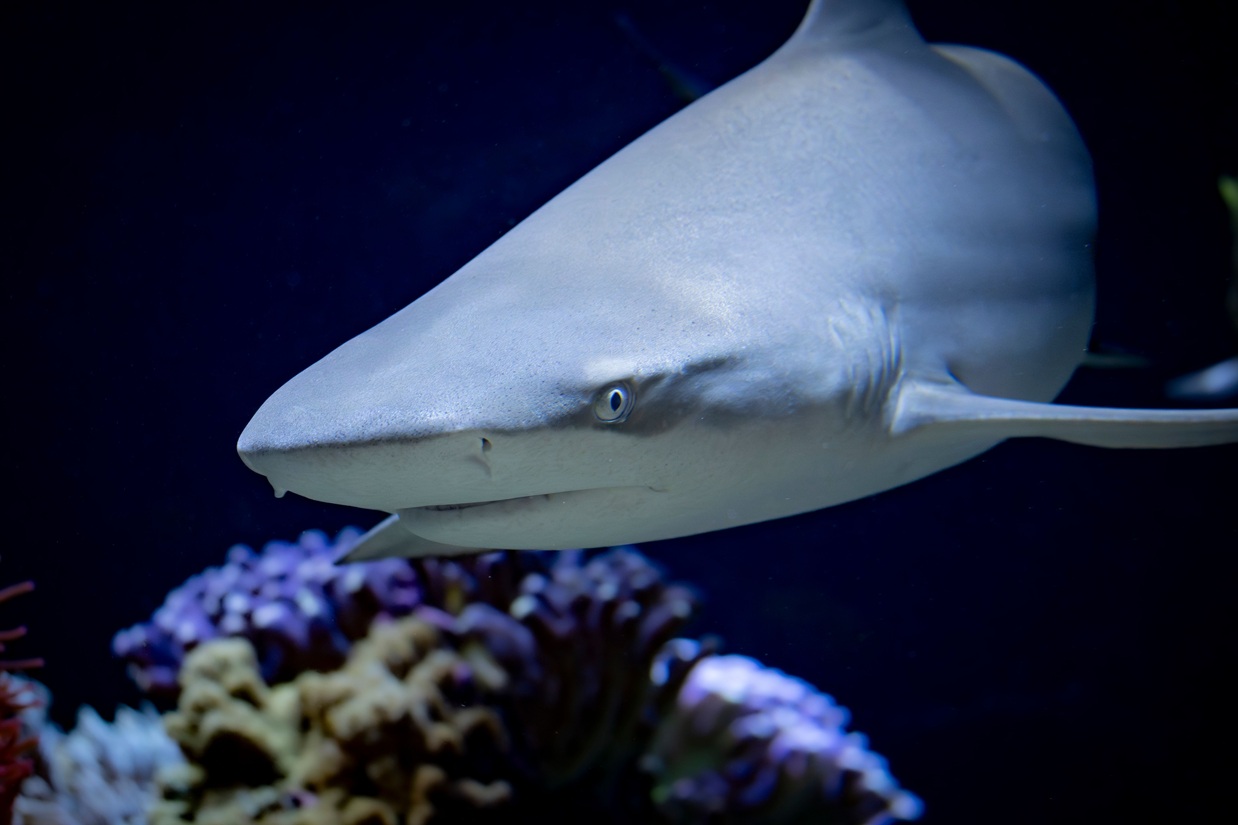
It isn’t large, isn’t aggressive, and isn’t rare within the archipelago. That combination is exactly what makes it valuable to a first-time visitor: a real, wild, unmistakably shark-shaped shark, viewable at arm’s length, that has never posed a documented threat to a human in these waters.
Quick Facts About The Galápagos Whitetip Reef Shark
| Category | Detail |
|---|---|
| Scientific name | Triaenodon obesus |
| Average size | 1.5 – 1.6 m |
| Maximum size | 2.13 m |
| Weight | Average 10 kg, maximum around 18.3 kg |
| Lifespan | 14 – 19 years in Galápagos waters |
| Diet | Small reef fish, octopus, crabs, and other crustaceans, hunted mostly at night |
| Conservation status | Vulnerable (IUCN) |
| Population estimate | No archipelago-wide count exists, but it is considered the most abundant reef shark in Galápagos waters |
| Distribution | Found throughout the archipelago, most reliably around North Seymour, Champion, Gardner, and northern Isabela |
| Unique trait | Can breathe while stationary, letting it rest motionless in caves during the day instead of swimming continuously |
Evolutionary Origins
The whitetip reef shark belongs to the requiem shark family, Carcharhinidae, a group that also includes the tiger shark and the bull shark. Fossil teeth attributed to close relatives of Triaenodon go back roughly 20 million years, well before the Galápagos Islands themselves existed — the archipelago is younger than the shark lineage that now calls it home.
That timing matters. The whitetip didn’t evolve in isolation here the way the marine iguana or the flightless cormorant did. It arrived the way most Galápagos marine species arrive: by swimming in once the volcanic islands rose far enough out of the Pacific to form reefs. Its range already stretched from the Red Sea to the eastern Pacific, and the cold, nutrient-rich waters around the new islands offered exactly what a reef-dwelling shark needs — rocky ledges to hide in and a steady supply of prey hiding in the same rocks at night.
Unlike the marine iguana, the shark shows almost no sign of having changed shape or behavior since it got here. What it kept from its ancestors is a body built for stillness rather than speed: a broad, flattened head, small eyes set for low light, and gill muscles strong enough to force water through without forward motion. Evolutionarily, it didn’t need to adapt to Galápagos. Galápagos simply gave it more cave real estate.
Physical Characteristics
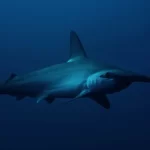
The name gives away the field mark. The tips of the first and second dorsal fins, and usually the upper lobe of the tail, are bright white against an otherwise gray-brown body. The underside is pale, almost cream-colored, and some individuals carry faint dark speckling along the flanks.
The body itself is narrow and almost tube-shaped, an adaptation for squeezing into tight crevices rather than for speed. The head is broad and flat, with a blunt snout, small barbels near the nostrils, and eyes positioned with vertical, cat-like pupils — useful for a species that does most of its hunting after dark. Inside the jaw sit somewhere between 84 and 98 small, sharp teeth, arranged in rows built for gripping slippery prey rather than tearing flesh.
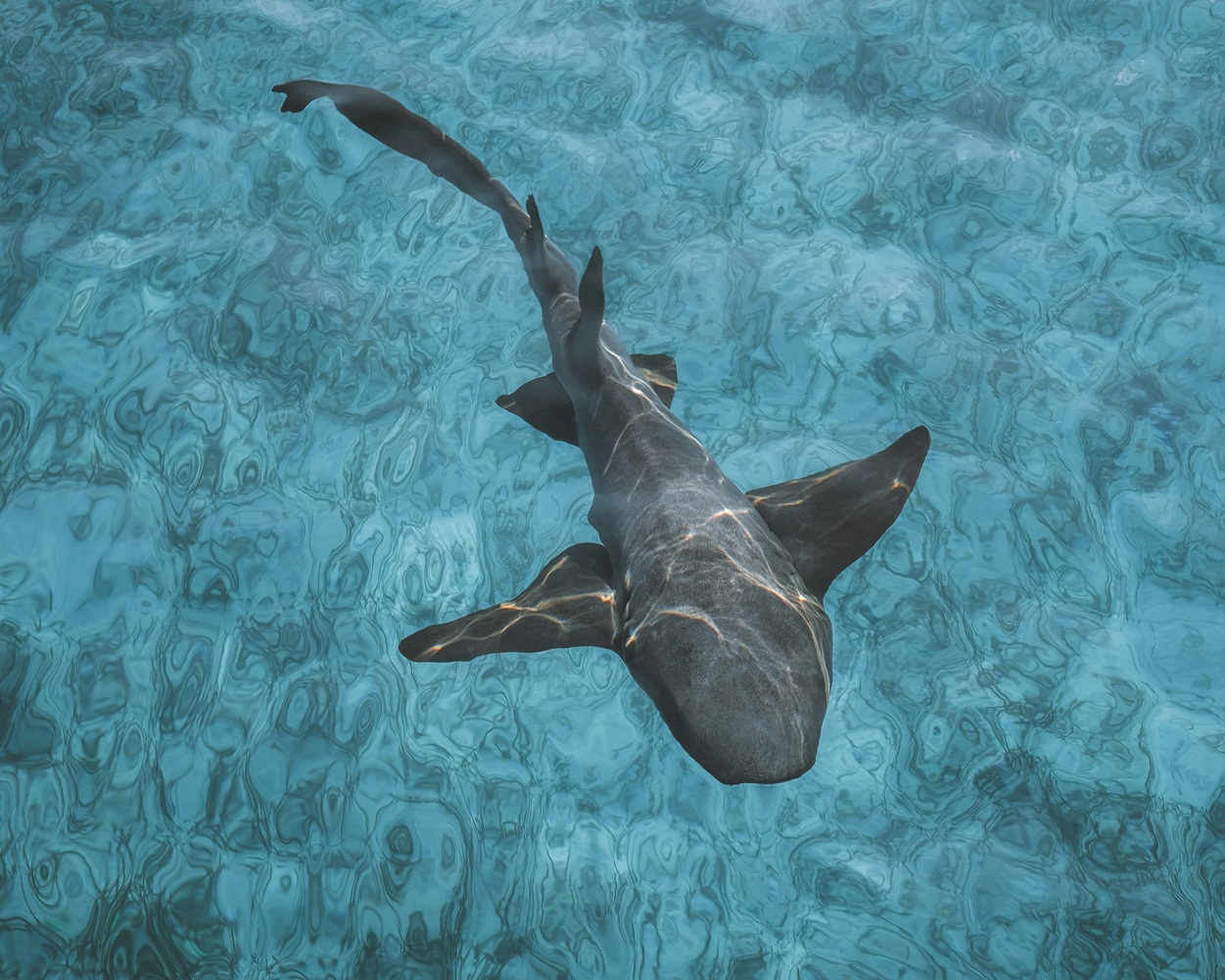
Size-wise, this is one of the smaller requiem sharks. Adults in Galápagos typically measure 1.5 to 1.6 meters, topping out around 2.1 meters and 18 kilograms. A fully grown human diver is, in most cases, longer than the shark swimming past.
Extraordinary Adaptations
Buccal pumping is the whitetip’s signature trick. Where most sharks must keep swimming forward to push oxygenated water over their gills — a condition called obligate ram ventilation — the whitetip can actively pump water through its mouth and out its gill slits while sitting completely still. That single mechanical difference explains almost everything distinctive about how the species behaves: the daytime cave-stacking, the years-long loyalty to one crevice, the ease of spotting it without a boat or a dive tank.
Its hunting senses lean hard into darkness. Electroreceptors on the snout pick up the faint electrical fields given off by prey buried in sand or wedged into rock, while the shark’s eyesight — sharp in low light but unremarkable in daylight — plays a secondary role, mostly for navigation once it’s already closing in. That’s also why the species is nocturnal rather than crepuscular: full night gives it the sensory advantage over prey that rely on sight.
The narrow body serves a second purpose beyond squeezing into caves. It lets the shark hunt cooperatively in tight spaces that larger predators can’t enter, chasing octopus and reef fish into dead-end crevices where a bulkier shark would simply lose them.
Distribution
Within the Galápagos Marine Reserve, whitetip reef sharks turn up almost everywhere there’s rocky reef, but a handful of sites produce sightings reliably enough to build a tour around: North Seymour, Champion islet off Floreana, Gardner islet near Española, and the channels around northern Isabela — Las Tintoreras chief among them.
Depth range is wide on paper, with individuals recorded from the surface down past 300 meters, but in practice almost all Galápagos sightings happen in less than 40 meters of water, and the Tintoreras channel itself rarely exceeds a couple of meters at low tide. That shallowness is exactly why the site works so well for shore-based viewing — the sharks aren’t avoiding depth, they’re using it.
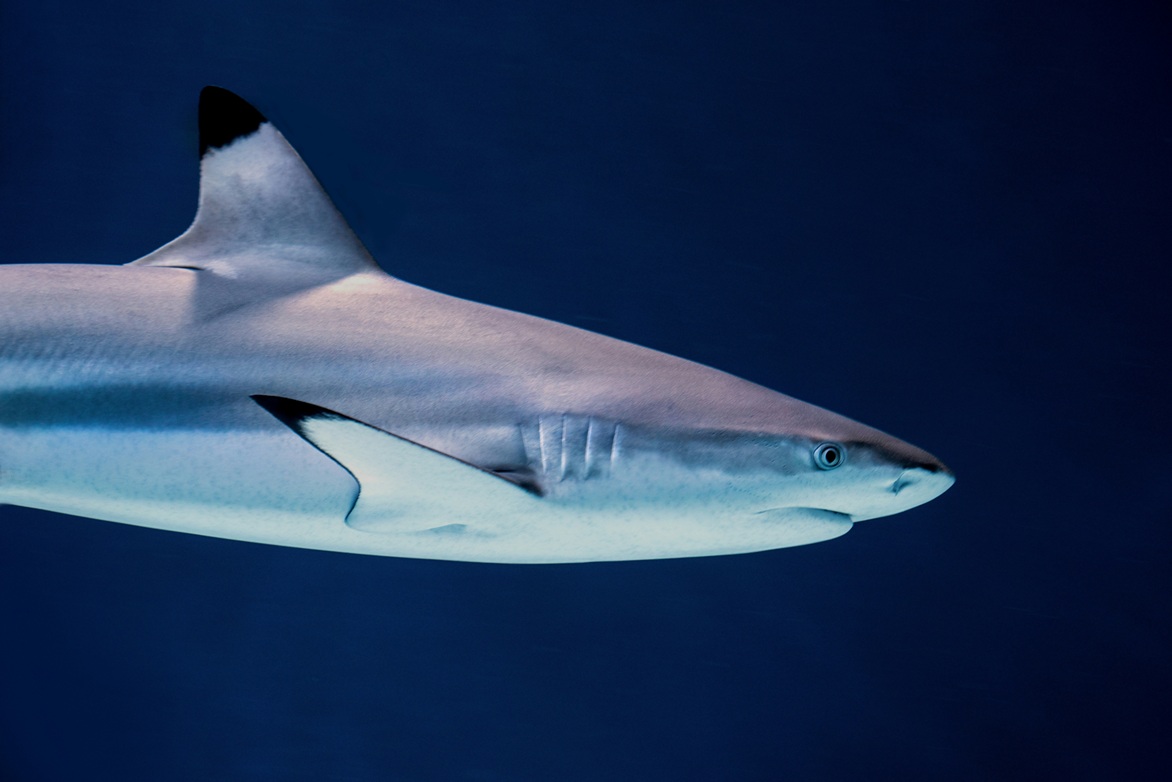
Compared with the wider Indo-Pacific, where whitetip populations have been hammered by gillnet and longline fishing in unprotected waters, the Galápagos population is doing comparatively well. Inside the marine reserve boundary, no legal fishing pressure targets the species, and the sharks show no need to migrate away from the islands to find food or avoid threats.
How The Whitetip Compares To Other Galápagos Sharks
| Species | Typical Habitat | Behavior Toward Divers | Conservation Status |
|---|---|---|---|
| Whitetip reef shark | Shallow reefs, caves, under 40 m | Calm, curious, rests near swimmers | Vulnerable |
| Galápagos shark | Deeper rocky slopes, drop-offs | Bold, will circle divers at depth | Near Threatened |
| Scalloped hammerhead | Open water near seamounts, Darwin and Wolf | Schools at distance, avoids close contact | Critically Endangered |
| Blacktip reef shark | Very shallow lagoons and flats | Shy, tends to flee when approached | Vulnerable |
Behavior and Reproduction
By day, whitetips are social almost to the point of looking lazy — piled two or three deep in the same cave, sometimes with the same neighbors for years. That daytime stillness ends fast after sunset. Individuals split off and hunt largely alone, working the reef for octopus, crabs, eels, and small fish hidden in the coral, using smell and electroreception more than sight.
Mating follows a pattern that looks rough from the outside: a male grips the female by a pectoral fin to hold position during copulation, and because he can’t ventilate properly in that grip, the act has to be quick. Females don’t breed every year — most reproduce on a two-year cycle, mating with as many as five different males in a season. Gestation runs ten to thirteen months, after which she gives birth to a litter of roughly one to six pups, each about 52 to 60 centimeters at birth and fully independent from the moment they’re born. It takes around eight years for a pup to reach sexual maturity, a slow timeline that makes population recovery correspondingly slow if numbers drop.
Adult whitetips have essentially no natural predators inside the Galápagos reserve. The bigger risk to a juvenile comes from other sharks, not from anything on land or in the air.
Conservation Status
The IUCN lists the whitetip reef shark as Vulnerable, and the qualifier matters: that status reflects steep declines across its Indo-Pacific range, where shallow habitat and slow reproduction make the species easy to overfish and slow to bounce back. Gillnets and longlines account for most of that pressure, and because whitetips are so loyal to a single patch of reef, a wiped-out local population doesn’t get repopulated by shifting sharks from elsewhere the way a more migratory species might.
Galápagos is the exception rather than the rule. Fishing for sharks has been banned throughout the marine reserve, and the whitetip’s own homebody habits work in its favor here — there’s no commercial incentive pulling in the kind of large-scale netting operations that damage populations elsewhere. In 2022, countries at CITES voted to add controls on the commercial trade of 54 requiem shark species, including this one, tightening the net against exploitation outside protected areas.
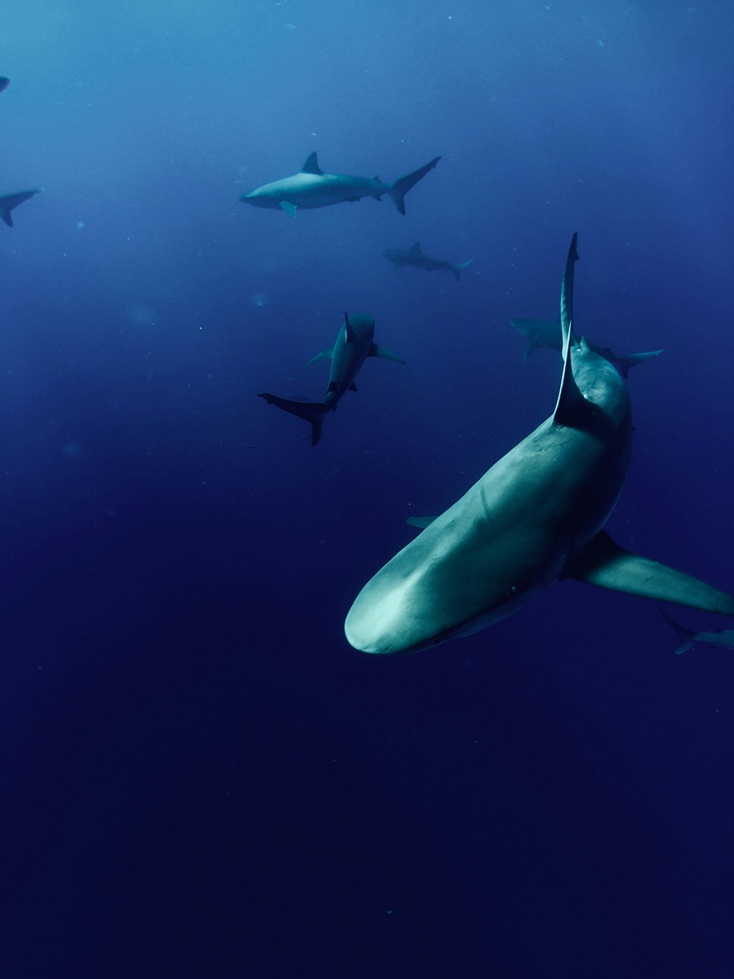
Conservation groups working in the islands have pushed further than passive protection. Drone surveys and capture-recapture studies are being used to map nursery grounds so tour operators and fishers can avoid disturbing pupping sites, and there’s an active proposal to establish a protected “swimway” linking Galápagos to Cocos Island in Costa Rica — a corridor meant for wider-ranging sharks, but one that would tighten protection along the whitetip’s range as a side effect. A shark sanctuary already exists around Darwin and Wolf islands, the reserve’s northernmost outpost and a stronghold for several shark species at once.
Where To See Them In Galápagos
Las Tintoreras, a cluster of low black-lava islets ten minutes by boat from Puerto Villamil on Isabela, is the single most reliable place in the archipelago to see this species without diving. A narrow channel between two lava walls traps sharks in shallow water, especially around low tide, and a short walking trail runs right along the edge of it — no snorkel gear required, though most tours pair the walk with a swim nearby. Mornings and late afternoons tend to produce the most activity, matching the shift between the shark’s resting hours and its earliest hunting hours.
Beyond Isabela, North Seymour and Gardner islet near Española both produce consistent sightings for snorkelers, and Champion islet off Floreana is a favorite among divers for the same reason. None of these sites requires deep water or technical diving — this is a species you meet in the shallows, not on a wall dive.
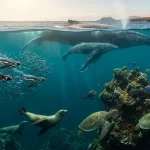
Wildlife at Darwin and Wolf draws a different crowd of divers chasing hammerheads, but for a shore-based, all-ages encounter, Tintoreras remains unmatched. The islet’s lava trail also cuts straight through one of the archipelago’s largest marine iguana breeding colonies, and it’s common to see blue-footed boobies and frigatebirds working the bay while sea lions loaf on the sand nearby. Occasionally a small raft of Galápagos penguins passes through the channel too, which is about as strange a photo as this archipelago offers.
Getting to Isabela is its own small logistics puzzle. Most travelers arrive by inter-island ferry from Santa Cruz, and it’s worth checking current ferry prices and where to board before locking in a tour, since Tintoreras excursions depart from Puerto Villamil itself rather than from the main tourist towns on Santa Cruz or San Cristóbal.
Final Thoughts
What sticks with most visitors after Las Tintoreras isn’t the size of the sharks — they’re smaller than people expect — but the stillness. A shark that doesn’t move, doesn’t flee, doesn’t seem to register you as anything worth reacting to, breaks a mental image most of us have carried since childhood. This is a predator that has simply solved the problem of stress differently than we assume predators do.
That calm is a biological accident more than a personality trait. A shark that can breathe without swimming has no reason to burn energy fleeing a snorkeler who poses it no threat. Evolution handed the whitetip an unusually relaxed schedule, and it uses every hour of it — resting through the heat of the day, hunting through the cool of the night, repeating the same rhythm in the same crevice for years at a stretch.
Whether that rhythm continues depends entirely on what happens outside Galápagos’s boundaries. Inside the reserve, the whitetip is about as protected as a shark can be. Outside it, in waters without the same fishing bans, its populations keep sliding. Puerto Villamil’s ten-minute boat ride offers a rare thing: proof that a healthy shark population and a thriving tourist economy aren’t opposing forces, provided the fishing line stays out of the water.
Frequently Asked Questions About The Whitetip Reef Shark
Are whitetip reef sharks dangerous to humans?
No confirmed attacks on humans are attributed to this species in the Galápagos. They’re generally calm and more curious than aggressive, though guides still recommend keeping a respectful distance and never touching or cornering one.
Can you swim with whitetip reef sharks at Las Tintoreras?
Yes. Most Tintoreras tours combine a shore walk along the shark channel with a nearby snorkeling stop where sightings of the same species are common, always with a certified naturalist guide present.
Do whitetip reef sharks migrate?
Not in any meaningful sense. Individuals are highly site-faithful, often returning to the same cave or crevice for years rather than roaming between regions.
How long do whitetip reef sharks live?
Around 14 to 19 years in Galápagos waters, though some populations elsewhere have been recorded living up to 25 years.
Can visitors touch the sharks at Las Tintoreras?
No. Galápagos National Park regulations prohibit touching any wildlife, sharks included, both for visitor safety and to avoid stressing animals that are resting rather than fleeing.
What is the best time of day to see sharks resting at Tintoreras?
Early morning and late afternoon tours tend to coincide with the shift between resting and hunting behavior, and low tide often traps more sharks visibly in the shallow channel.